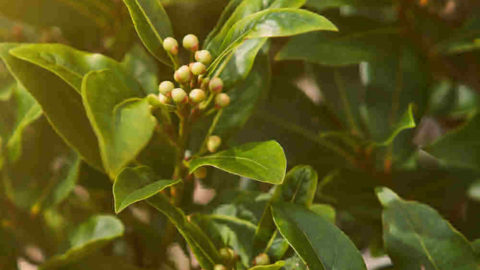
Bay Leaf plants are slow growing trees with leaves that are used as seasoning in cooking. It is also known as bay laurel, sweet bay and simply laurel.
If you enjoy growing herbs, this is a great one to try, since it has a very aromatic flavor.
Bay leaf plants are a member of the family lauraceae. These trees are native to the Mediterranean region and the leaves are often used in Mediterranean recipes.
Instead of grinding the spices, even when dried, the leaves are used whole in recipes.
Bay Laurel was considered a sacred plant to the Greeks and Romans. Trees were often planted near temples and the foliage was burned during various rites.
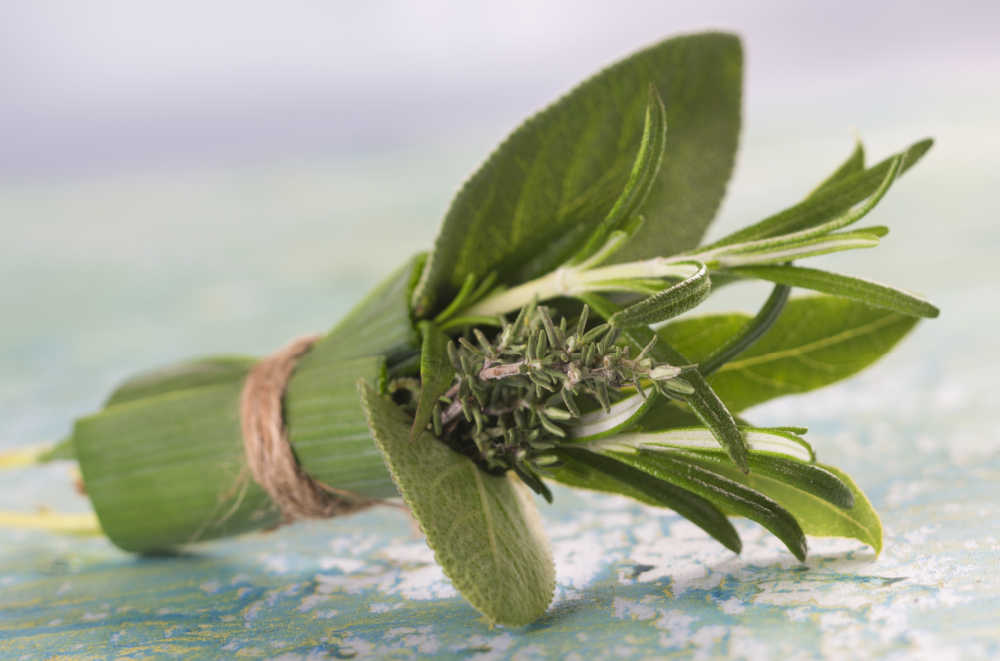
If you enjoy cooking stews and casseroles, your recipe may call for a bouquet garni.
This is a bunch of herbs (traditionally thyme, sage and bay leaf – sometimes rosemary and tarragon too) tied in a bundle and added to the liquid to flavor it.
[bctt tweet=”Dried bay leaves are often used in Mediterranean cooking and in many recipes for soups and stews. Did you know that you can grow it in your back yard? Find out how on The Gardening Cook. 🍃🍃🍃” username=”agardeningcook”]
Growing bay leaf plants
Have you ever seen a pot of beef stew or a hearty soup with a large leaf in the middle of the mixture? You are looking at a bay leaf.
This herb adds a robust flavor to soups and stews and has long been used as a seasoning in cooking.
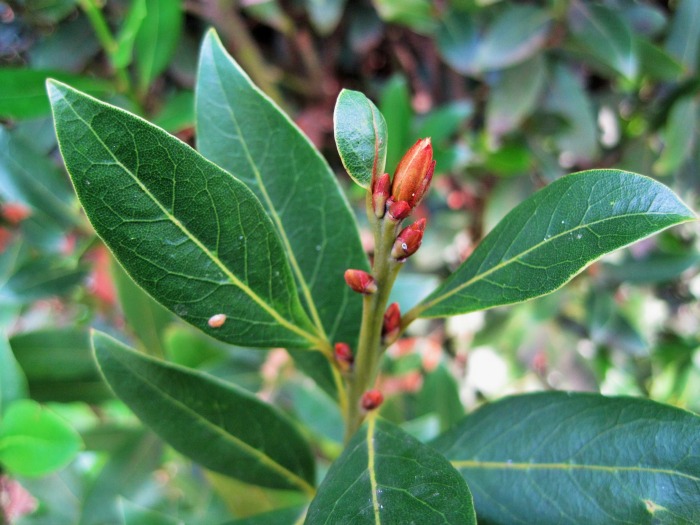
Bay Leaf plants are tolerant of most soil types. Ideal PH range is 6-7, but the plant is somewhat versatile and can stand a range of 4.5 to 8.3.
What it will not tolerate is soil that does not drain well. Applications of compost or other organic matter will help to keep the soil draining well.
Size of bay leaf plants
Bay Laurel can be grown indoors in pots, and outdoors as shrubs and also as trees. It is a slow growing plant and can reach heights of 59 feet in the conditions are right.
Although the plant is a tree at heart, it can be kept smaller by pruning the plant or growing it in containers near your vegetable garden.
Container grown plants will not get to this large size. Prune it so that it gets no taller than 5-6 feet so that you can move it indoors when the weather gets colder.
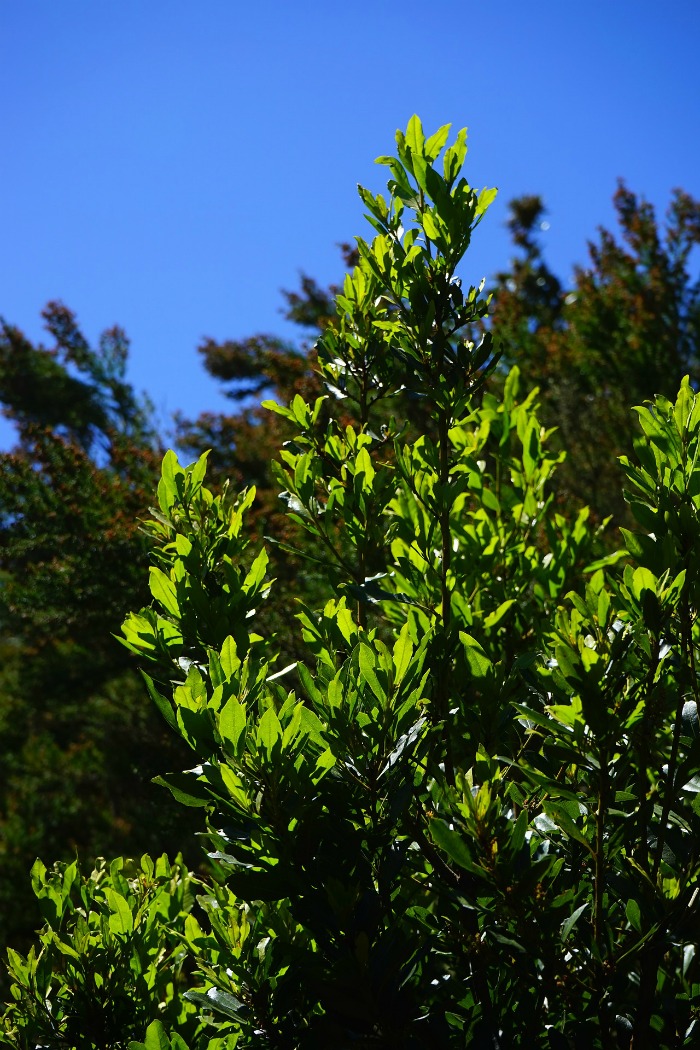
Sunlight and moisture conditions for bay laurel
The plant grows best in full sun to partial shade. If you grow it outdoors in hot climates, it will benefit from some afternoon shade.
If you grow the plant indoors, it will need bright light and the occasion misting to keep the humidity level as the plant likes it.
Trees grown outside don’t generally need much in the way of fertilizer but container plants will benefit from a balanced organic fertilizer such as fish emulsion in the spring and summer.
Flowers and leaves of bay leaf plants
Bay trees are dioecious, which means that both male and female plants are needed to produce seeds that are viable. The seeds form on the female plants and are contained inside the berries that form in the fall.
Each female flower has a single seed.
Female plants have flowers with only a pistil. Male plants have flowers with only stamens. Only the female bay laurel plants will bear fruit.
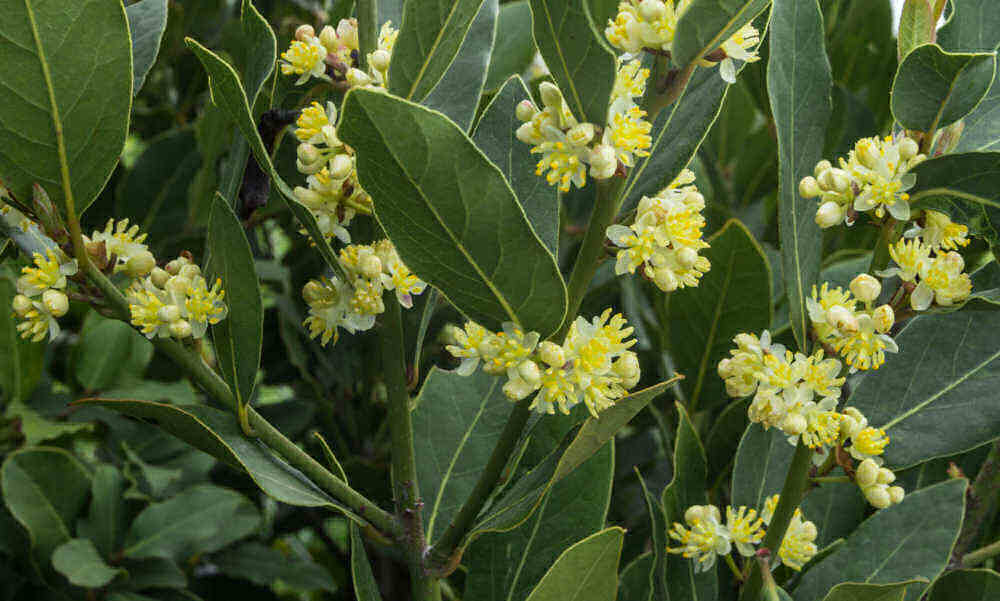
Bay leaf plants have small yellow flowers that appear in the spring. These mature over the summer and develop into blackish purple berries in the fall which contain one seed.
If you grow it as a hedge and prune it often, you will have less in the way of flowers and berries.
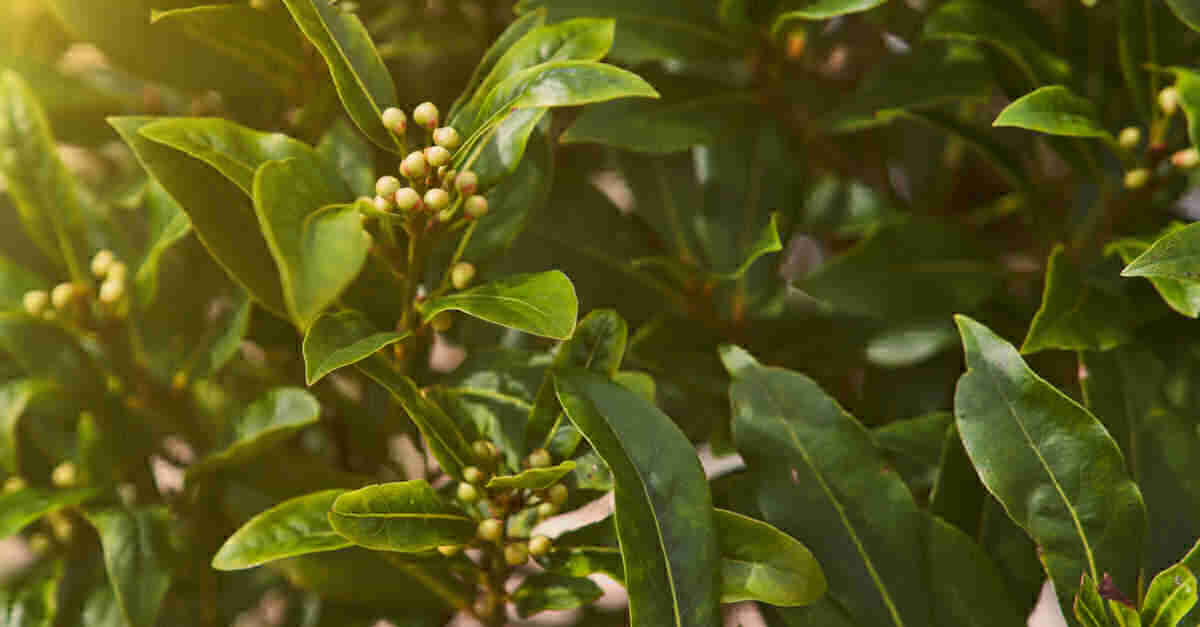
The flowers of bay leaf are quite showy. They start as small buds and open into clusters. The plant smells sweet when flowering but the leaves are quite pungent.
How to grow bay laurel
Hardiness zones for bay leaf plants
Bay Laurel is hardy in zones 7-10. In colder zones, it is very frost sensitive, but can be grown in a pot and brought indoors for the winter, or kept in a sheltered closed area where the extremes of the cold won’t kill it.
It can only take temperatures down to about 20 degrees F.
In warmer zones, the plant is considered a perennial.
Drying bay leaves
Bay leaves can be used whole or ground in cooking. Harvest leaves from plants at least 2 years old. (Mature bay leaves have more flavor.)
To dry the leaves, place them on parchment paper on a large tray in a single layer. Leave them for 2 weeks in a warm dry room.
Store bay leaves whole in an air tight container. You can also grind them in a mortar and pestle if you wish, but I always use bay leaves whole.
Dried bay leaves are very fragrant and do not disintegrate during the cooking process. They are removed before eating the cooked recipe.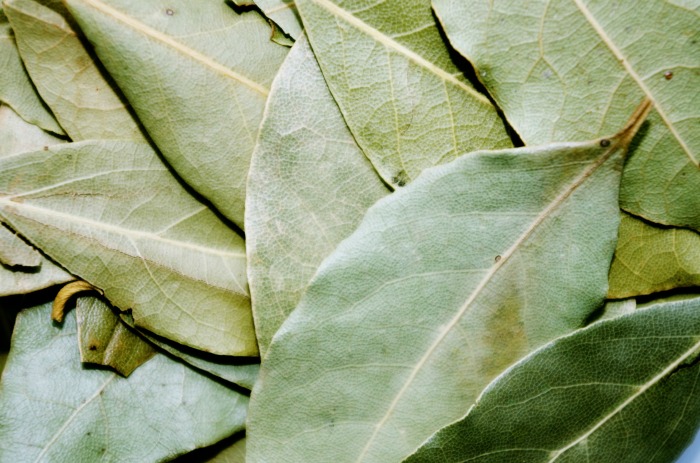
Ways to grow bay leaf plants
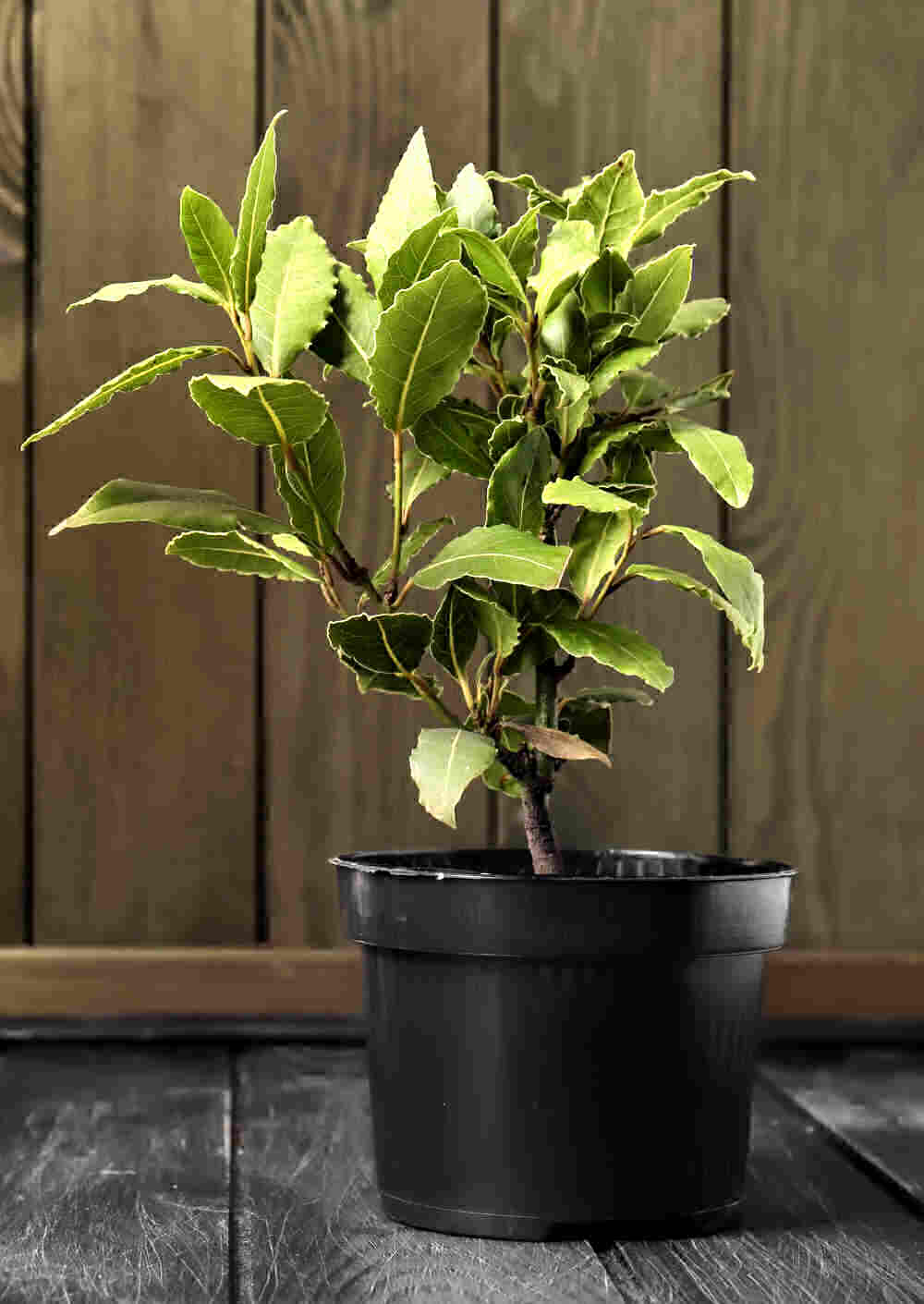
In warmer zones, grown bay laurel as a tree. It can used in topiary to create ball shaped plants. The stems are also grown twisted and they are grown as hedges, too.
Since bay is only hardy to zone 8, Bay Laurel is often grown as a houseplant in colder zones. For best results re-pot a container plant every 2-3 years
Pest and diseases that affect bay laurel
Thankfully, bay laurel is resistant to most pests and diseases. Weak plants can attack scale and aphids.
Treat infected plants with an organic pesticide. Common problems with bay leaf plants is simple over-watering, cold temperatures and lack of sunlight.
Propagation of bay leaf plants
The plants take a long time to germinate from seed. Normal plant propagation is from cuttings or air layering.
The cuttings need to root in a heated propagator with high humidity. It’s quite difficult to propagate.
Other uses of bay leaves
In addition to using bay leaves in recipes, they are also used in many other ways. The extract of bay laurel has been used in astringents and even as a treatment for open wounds.
Bay leaves soaked in water and formed into a poultice has often been used to treat poison ivy, and other poisonous plants.
Bay leaves and extracts are often used in massage therapy and aromatherapy to give some relief from of symptoms of arthritis and high blood pressure.
The leaves of bay laurel plants have long been used to make wreaths, garlands and crowns.
It is common to see the shape of a laurel crown on trophies. In early Greek and Roman times, crowns were created with stems of the plant to crown the athletes and rulers.  The links to products below are affiliate links. I earn a small commission, at no extra cost to you if you purchase through an affiliate link.
Pin these plants for growing bay leaves for later
Would you like a reminder of this post for how to grow bay laurel? Just pin this image to one of your gardening boards on Pinterest.

Admin note: this post for growing bay laurel first appeared on the blog in December of 2017. I have updated the post to add new photos, a printable growing tips card, and a video for you to enjoy.
How to Grow Bay Leaf Plants (Bay Laurel)
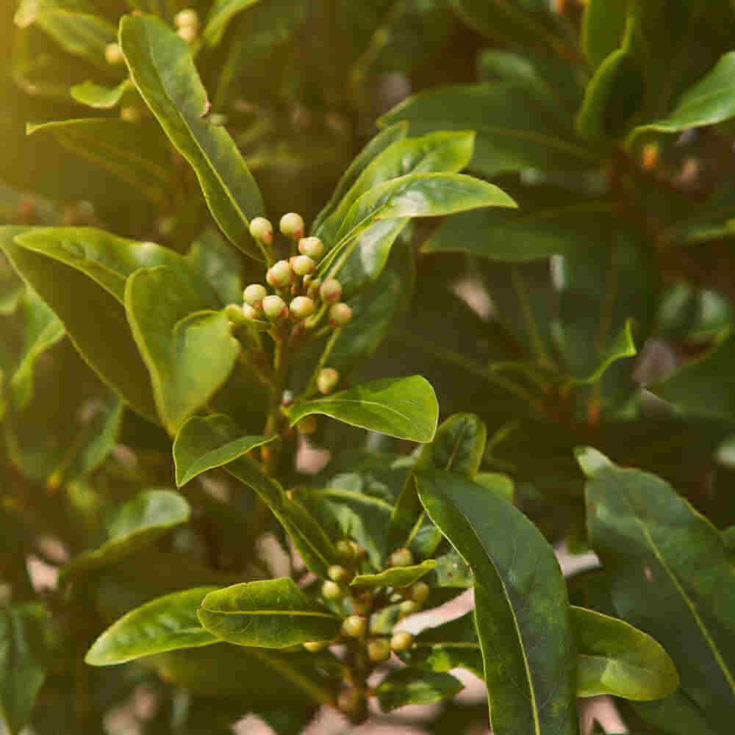
Bay leaves are dried to use in recipes from soups to stews and more. See how to grow it in your back yard.
Materials
- Bay leaf plant
- Organic matter or compost
Tools
- Watering can or hose
- Spade
Instructions
- Choose a spot that gets full sun to partial shade.
- Dig a hole and add compost or other organic matter.
- Place the bay leaf plant in the hole, water well and keep evenly moist.
- Be sure the soil drains well.
- Fertilize in spring and summer in following years.
- Bay plants will grow tall outdoors. If growing in a pot, prune to 5-6 feet.
- Hardy in zones 7 to 10. (will only take the cold down to 20 degrees F.)
- Propagate by cuttings or air layering.
- Flowers emerge in spring and turn to berries in the fall.
- Generally pest free, Weak plants may attract aphids or scale,
131 responses to “Bay Leaf Plants – How to Grow and Care for Bay Laurel”
My bay Laurel tree is about 1 year old. I live in Alaska so keep it in doors.
It has a sticky shiny substance on it’s leaves and on the table under it.
What is it and what should I do about it?
Hi Susan, Aphids, mites, and hard shelled scales can all secrete a clear sticky substance called honeydew. Check the undersides of your leaves to see if you have an infestation of any kind. Carol
I had a similar thing happen to my mine shortly after I got it. I found Neem oil worked and have not had a problem since.
Neem oil tends to stain plants leaves, makes them brown. Not big fan, also not particularly effective if aphids infestation is heavy.
Aphids can be removed with a spray of water. I use a drop of liquid soap in a spray bottle spraying underside and top of leaves… keep it sitting in the sink for a few min and rinse W the water spray. Repeat a week later. Neem is effective and will not damage leaves in the right concentration. It’s 2 tsp to a gallon of water. It is a strong pesticide.
You can use food grade DE to avoid getting an infestation. Spray off any predator of the plant first as best you can without killing your plant. With a mask on, puff diatomaceous earth all over and under the plant. DE can kill all hard shelled bugs, so caution around flowers is all that is needed to keep bees from being susceptible to it. Also, this needs reapplied after heavy rains, and is more about avoidance than it is killing bugs. You can eat things that touched food grade DE without it even washing off, just breathing it can cause lung problems and maybe even cancer.
How did it go? What did you do?
My little bay tree (bush) is looking a bit sad in it’s pot. I have ‘refreshed ‘ the compost ‘ for the last 2 years. But it looks under the weather this year. The leaves have lost their vibrant colour and are not as big as they were. I think it is pot bound but do not want to increase the size of the pot. Can I trim the root bowl and if so how ?
Hi Jim.Yes it is possible to trim the roots ball of a plant and keeping it in the same pot is often the reason to do so. To prune the root ball, use a pair of scissors or pruning shears and cut around and under the root ball. You can be pretty aggressive with it. Go slowly and examine as you go.
When you are done, use a fork to loosen the soil, teasing out the roots and tangled mass. This will encourage new roots to expand into the soil that will now be in the pot instead of the tangled roots.
Be sure to keep the plant evenly moist as it recovers from the procedure. It’s normal for the plant to take a little while to get back to growing.
Carol
Hi Carol,
I just replanted my father-in-laws bay leaf bush and of course it was the hottest week in ca. history ive b1 my plant but still looks like its dying is there anything i can do to save it we face east and its at the front of my house so it doesnt get any shade until about 1pm
Hi Gene. I’ve been hearing about the hot weather in CA! There is not much you can do since it is planted in the ground so it’s not possible to move it to a shadier spot for a while. You could try using a beach umbrella to shade it until the hot weather passes and be sure to give it extra water. My hydrangeas droop like mad in the summer here in NC but extra water does help. Carol
I recently purchased a bay leaf plant, I repotted it and now some of the leaves are dying! Is it shock from repotting it?
Hi Robin. It could be shock from replanting. Some of the common problems that lead to transplant shock are repotting at the wrong time (best time is spring) or potting in a different type of soil, or giving them different light conditions. Repotting in a pot too much larger can also cause problems.
Carol
I am growing a bay leaf plant for half year and I found it withered recently. What should I do?
Hi Gary. The plant is badly dried out and may not recover. I’d remove the dead leaves, move it to a less sunny spot (for now) and start watering again. You might be able to take cuttings of some healthy stem sections to try and root for a new plant. Carol
@Carol, we have a large plant that just had the roots chopped off outside the pot. Can I save it?
This has happened to me in the past and the plant survived.
My bay leaf plant looks like a skinny little branch it’s getting tall and no new shoots. How do I get it to fill out.
Hi Gina. If you cut of the top growing shoot, it will encourage the plant to bush out. It also sounds as though it needs more light if it’s growing that way. Carol
Carol I m so glad you’re here in N.C.! I have several huge shrubs aka small trees. My husband pruned them back big time. They shot right back! In talking to a neighbor about removing the shrubs, he told us they were bay leaf shrubs?! Oh I’m All about herbs and such! Are these the Bay Leaf Laurels? How do I tell if they are the kind I can dry and cook with? I don’t want to poison us or anyone else! The leaves look just like these pictured, but I don’t recall seeing and blooms or buds? Thanks
It sounds like you are dealing with mature bay leaf plants. In temperate climates they are grown as trees and do flower. You are lucky to have a mature plant that doesn’t mind our temperature changes.
Hi, I have a beautiful 10+ yr old bay tree that has the tiny flower pods but they haven’t burst open to flowering. I live in the Hill Country of Texas around Henly, Texas. You stated it forms the blooms early spring but it’s now the end of October and no more action. We got a lot of rain this year, did that effect the bloom. There is no rot or change of any kind just unopened blooms. It is the first year I have seen any blossoms, did it get stunted. The tree is doing great. Would love to see it bloom. It’s now about 15 ft high
Hi Ria,
I have not had a bay leaf that is as large as yours since I have to grow it in a pot and bring it in for the winter. My research does show that bay trees come with both male and female flowers on separate plants and that the trees can take many years to flower. (people consider themselves lucky if they do!) Heavy rains can affect the way any plant grows, so it could be a factor since this could lead to root rot.
As long as the tree looks otherwise healthy, I would not worry that the flowers didn’t open. Perhaps next year!
Carol
Thank you for your reply. I agree I am very grateful for this beautiful bay tree. My Mother planted it in the ground against the house facing the west I believe at least 10+ yrs ago. It’s leaves even froze and survived. I guess it’s in a magical spot. This is its first year to have blossoms. I hope it blooms, but if not I have a great culinary tree. I love to dry and share with some of our local restaurants in my home town. If it blooms I will let you know. Have a beautiful day.
Hi Ria. If it set buds this year, it may flower next year. Maybe it’s a late bloomer! Carol
Hi Carol,
I just bought a bay laurel plant and plan on keeping it in the house as it is now November . Our days and nights are getting colder here in Indiana.
Is a southern exposure the best place to keep it or will grow lights give the plant the light it needs. Jeanne
Hi Jeanne. Bay leaf plants need a lot of light (6-8 hours of sunlight). A Sunny window is suggested to grow them indoors or the equivalent of full sunlight. But grow lights take that light situation into consideration and should work well. Carol
What is the coldest temperature a bay shrub in a pot will take?
Hi Nadine. Bay really likes a warm climate and it’s suggested that the hardiness zones are 7 and waremer. (some resources even say zone 8 and up.) I have read that a bay leaf can’t take temperatures lower than 20 degrees F Carol
hello, how often do you water a bay leaf plant, I transplanted mine and gave it some food, maybe overwatered. It still looks good it is dry and the leaves have dried up and fallen off one branch, and I turned over one leaf and it looked like tiny flour on it. did I overwater and now its dry and underwatered. I do know it needs better light and I will move it to a grow light, how many hours a day of light yi. Help
Hi Michelle. It sounds like your problem is not watering but that you have mealy bugs. This can look like white flour on the bottom of leaves. This can spread through any plants that come in contact with it, since these are small bugs. Either treat for mealybugs or discard the plant. Carol
Hi Carol. I have large bay leaf tree grown from a little 4 in pot with only 2 leaves on the stem. Now 10 years have flown by and it is between 12-15 feet tall. I live in the beautiful Tx hill country where it is HOT and often in drought conditions. I have yet to see seeds but maybe I have just not looked closely enough. Can these be propagated from a cutting and if so —— how? I have done nothing special to this lovely tree except when 1st planted.
Hi Lois. Most plants will grow from cuttings. For a bay leaf this is best done in lat summer. Choose healthy new stem cuttings (woody cuttings don’t root well. Dip in rooting powder and place in a mixture of soil, sand and vermiculite. It can take quite some time for this type of cutting to root. When you give a little tug and it holds in the soil, you’ll know that roots have formed. carol
Thanks Carol for your help
My pleasure Lois.
I live in spain, i have a large bay bush and this year i see many new green stems from the ground that are taller than the older branches. How can i tell if they are suckers? If they are should i remove them? Can i prune in summer?
The best time to prune bay leaf is in late spring to mid summer. Suckers emerge from the roots of the plant and should be removed.
Carol, not really a question, but I was looking for some info and found your site. Very informative, thank you.
I live in SE Virginia and my sister bought a small bay laurel as a present a few years ago (three or four now?). I didn’t really know how to care for it and as a lazy gardener, I’ve repotted in a few times, watered it now and then, and put it in the garage when it gets really cold in the winter (I think we’re in Zone 8a). For the most part, it’s doing great, about three feet tall out of the pot with a lot of branches. Most plants that make it in my yard are plants that do well (or at least ok) when I ignore them. We’ve used up all of the dried bay leaves we used to have and only use fresh now, and we have several friends that have visited that have left with fresh bay leaves. Sun in the summer, garage in the winter, and don’t overwater seems to have worked for me.
Glad you like the site Phil. Thanks for your tips on growing bay leaf.
I have a plant that we have called a bay leaf plant for ten years. But the leaves are more rounded. I have seen them in the islands growing very tall.
The leaves are drying and falling off.
Is there more than one type of shaped leaf for a bay plant.
Hi Eulalia. There are different shapes of bay leaves. You can see Google images of them here.
I like to study about bay leaf plant how to grow in sri lanka thanks.
I have a bay leaf plant that I pruned off the top to get it to fill out which it did and is growing well. I wish I had cut it shorter because the stem is about 7″ tall before the branches start. The stem has several “buds” on it. Should I leave them alone? Will they sprout into new branches?
Hi Sharon. Any place that you gut a growing stem will result in new tips coming off that point of the cut (usually two, one on each side.) You can cut the tip lower down, but you’ll lose those tips, obviously. Also, cutting the tip of a growing stem will sometimes push new buds off the stem making a bushy plant. Any new buds below the stem should make new branches. Carol
I think I killed by bay leaf plant. The leaves look dry and a bit discolored. Can it still be saved?? Thank you
You can try adding water but when a plant looks like this it almost means that it’s dead or dying from lack of water.
I have a Bay Tree isn’t 15 years old we keep in the house. This year the leaves are dry falling off the branches. I water once a week, it’s by a window. Any suggestions?
Bay trees are not really meant to be grown indoors when larger. It is likely pot bound. Check the root ball and if the soil is totally full of roots, repot into the next size pot and add new soil around the roots.
Hello,
I live in Durham NC. I bought a sweet laurel Bay plant this spring and was hoping to plant it outside this fall.
I’ve read that it is evergreen. I’m hoping to replace many of my bush evergreen plantings with ones that are edible.
Will it survive? Is there anything I can do to help it survive the winters?
Thank you
Durham is in zone 7b. The plant can only take temperatures down to about 20 degrees F. Here in Raleigh, it does occasionally get colder that, and I would suspect Durham does too. It would he hit and miss whether it would grow. I would only try it in a pot that could be moved inside when it gets colder.
Thank you
Appreciate you taking the time!
I have a few bay trees that are about 3 yrs old. I mistakenly kept them sheltered for to long one winter and almost killed them. This year I kept one inside and another in a porch. The one inside did much better, even growing a shoot pretty quickly to about the same height as the other branches (I want to say a foot). My problem though is I was hoping to have it grow tall. Or rather more tree then bush (7shoots). What can I do to have it more like a tree.
Gotta say, I really wouldn’t risk planting another bay tree outdoors. It worked well in the Pacific NW, but we’ve lost every bay we’ve planted here to frost. Although we’re right on the line between 7b and 8a (central NC), the winter weather is recently too unpredictable. There were a few nights below zero this year.
I find the same thing. 7b is a tricky zone. Carol
Pruning techniques are what determines how a tree grows. If you have 7 shoots and no main trunk, it’s lot likely to form a tree shape. You could try cutting off some of the shoots gradually to see if one main shoot will thicken and form side branches.
HI! I have a bay tree that I planted about 25 years ago. I planted it on our hillside, close to a wooded area. I noticed it today. It is about 15 feet tall with a full shape. And it has another juvenile bay tree next to it, about 6 feet tall. They are healthy and gorgeous!
Is there a preferred time to harvest leaves? And can a vinaigrette be made from the leaves?
I am so excited that my tree has survived all these years! I live in the greater Seattle area, zone 7. It has survived cold winters and dry summers. It has the beginnings of flowers/berries on the branches.
Hi Karen. Bay leaves cab be harvested any time during the growing season. If you want to harvest a bunch of them at once, the best time is mid summer, when the leaves are at their peak. I don’t know about the vinaigrette. I assume so but have not tried this.
My bay leaf tree leaves have dried up from lack of water and sun what can I do t restore it
If the plant is really dead, there is nothing much that you can do to restore it. Try watering and moving it closer to sunlight. If it doesn’t start showing signs of growth, it’s time to replace it.
I purchased a bay leaf tree each for my twin sister and me for our birthday. We both live in Southern California. Neither one of us know anything really about this type of plant, but we both want to be able to use fresh bay leaves in our cooking. I purchased 6″ plants, so I guess it’s going to take awhile. Maybe I’ll buy another larger one. Your site is very informative. Thanks!
Yes, larger plants will give you more leaves for cooking without stunting the plant. Glad you are enjoying my site.
My dad gave me a plant he said was a laurel bush about 25 years ago for my yard, I was told recently that it’s a bay leaf tree!?!? It has flowers every year and then they turn into a medium color green like a large grape size then those seem to drop off and have a large seed inside that looks like a hazelnut so to speak, wild birds seem to go nuts over these. Is this a bay leaf tree I can use for cooking? My parents have passed away so I can’t ask them, I have google the name and not sure it’s eatable to use?
Bay laurel does indeed grow to a tree but starts out as a small bush. To be sure, you could take the leaves to a garden center and ask there.
Hello. I have a bay leaf that is making me very sad. I purchased it about 3 years ago and it was doing great. However, last winter here in the state of Washington we had a very bad winter (not normal) with 24″ of snow along with freezing temps. I not sure what to do with the bay as that all the leaves are brown. I waiting to see if there is going to be new growth and have not seen anything. It is not planted in a pot, it is in the ground. I don’t know what to do for it. Help
Hi Mary Ann. Winter with lots of snow and freezing temperatures can be hard on Bay plants and trees. They are only hardy in zones 7-10 and if temps are lower for long enough to be more in line with a colder zone, it can kill the plant.
The best thing is to prune it. Dead leaves will sap the strength of even a healthy plant and one that is distressed even more so. Then look for signs of new growth. If you don’t get any, the plant is likely too far gone.
Sometimes, nature just does things we don’t want and there is not much we can do other than start over.
My potted bay was doing relly well, but then developed something causing it todry out. I pruned down to the healthy area, and though it is growing, the leaves are now very thin and large, as if it were a different plant altogether., What is going on? MAybe it needs to be brought outside?
Thanks
Hi Annalise. Too little light can definitely be a cause of poor growth on a bay leaf plant. Take it outdoors to a filtered spot and gradually move it to more sunlight and it should improve. Also check under the leaves of the plant to see if you can see any bugs, which can cause spindly growth.
Hi. After a heavy rain, the water gathered in the tray of my potted laurel is literally vinegar, yellow colour. How did that happen? I don’t usually leave it in heavy rain, for fear of all minerals in the soil being washed away, but this rain occured during the night…
I’m afraid I don’t know Cris. Perhaps one of the other readers has an answer.
Hello,
I have a stable bay leaf tree which I have had for quite a few years. This year, I bought 2 smaller ones from our garden center. On one, all the leaves turned brown and fell off. The remaining stems (3) are turning dark and seems to be rotting from the top down. The 2nd one started to do the same but seemed to stabilize and even had some new shoots between the stem and leaves. But sadly, all those leaves are turning brown and curling up as well. Any way to save these plants? I know they are not infested with scale, if that helps any.
Thank you!
Hi Sharon. I’m not sure what to suggest if a plant is rotting from the top down. I have not seen that happen. Normally rotting occurs from too much moisture but it starts at the sol level. You may have just purchased bad plants. Sometimes this happens with the haphazard nature of watering in garden centers. Perhaps another reader has some advice.
Excellent review,very educational.
How to treat mealy bugs?
would appreciate the answer.
Yury
On small infestations a 70% or less solution of rubbing alcohol in water may be dabbed directly on mealybugs with a cotton swab to kill them or remove them.
What is the best type of soil for pots?
Any well draining soil will do. You can add some compost to the soil in the pot or perlite to make it drain better if your soil holds too much water.
I live in the center of Washington State, not a zone optimal for bay laurel bushes/trees. However, I would love to have one (I grow mainly herbs) and decided that if my mother-in-law could grow a lemon tree in Minnesota (bringing it in to a mildly warmed porch during the winter) then I could grow a bay laurel!
We were recently in the Bay Area/Berkeley area visiting our son and his family and went to a nursery one day–after talking for awhile to an employee there I bought my bay laurel tree/bush and brought it home to Washington!
So, any tips about making this work? I have an enclosed front porch, big windows on 2 sides(west and north), that we heat during the winter as we use it as a mud room for boots/gloves/winter coats, etc.
I’m planning on keeping it in the pot so I can move it in and out seasonally. Looks like I should probably repot it every 2-3 years? And keep compost on it so it will drain well?
Our back deck faces east and is shaded in the afternoon, so I’m figuring on keeping it there during the late spring/summer/early autumn, then moving it in.
Thank you for any tips you can send my way!
Hi Terry, I have had good success with growing plants that are not specifically for my hardiness zone by doing as you suggest I just treat it as an indoor plant in the cold months.
Repot when the roots start to fill the pot. Just use a pot one third larger. Compost will definitely help with drainage. It sounds like your spot should work well for it.
Carol
I have had a bay Laurel tree for six years in a pot. It got to about 4 feet tall and was doing great. Last fall we purchased a home and finally was able to plant it in the ground . It did great- new buds, new shoots, new leaves. But about a month ago we noticed that that bark was peeling off the lower part of the tree. One week later overnight one branch fell over and was dead. We cut it off. After 3 weeks the rest of the tree did the same. We are going to get a new one but we want to know what we did to go wrong. The roots are strong and deep but no tree.
It is hard to say exactly what could be the cause of this happening without actually examining the tree. Time of the year of planting, size of the hole planted in, type of soil in your ground and watering habits after planting can all play a part.
There could be soil borne diseases in the soil what the tree was planted in which would not show themselves right away. Getting the soil analyzed or have a local horticulture expert examine it would also help.
@Shirley, I have a bay tree in a pot that I put outside recently. It lost a branch, to a squirrel. By the time I brought it inside, the squirrel had also chewed 1/3 of the bark at the base. Could this be your issue?
I have a bay laurel tree that was planted about 10 months ago in central Florida. It has lots of green berries. If I remove the berries will the tree fill out faster?
Hi Ellen. Removing the berries won’t do anything for the bushiness of the tree. The only thing that helps with this is pruning the branches, so that they form extra branches at the areas that you cut. (best left to a professional who knows how to prune unless you are a gardener with knowledge of this aspect of caring for trees.)
Hello there! I’ve had a bay leaf potted plant for quite a few years and have had a few problems in the past that I’ve managed to resolve, like scales and mites. I’m in southern Ontario, 🇨🇦, so this overwinters indoors. Last year I put it at the bottom of a side entrance to the basement. Not a freezing temperature but, cold. It seemed ok there even if seldom watered.
This year I put it in a corner in the main floor kitchen, where it’s leaves are turning a rusty brown and falling off. I just removed all the affected leaves and moved it in the solarium with other plants.
When sunny it gets quite warm in there, but cool at night. I’m running out of ideas. Back in the staircase, treat it with some anti fungal, or?
Thank you for any suggestion…
It’s really hard to tell without looking at the plant to see what the problem is since you have managed to over winter it in the past. Perhaps take it into a local garden center to see if they have any ideas about what might be wrong?
A friend moved with too many plants to take with her so now I have a rescue Bay Leaf tree in a pot on the deck in full sun. She did great until a quick dip in the weather got her. I brought her in side to a very well lit but her spot did not have much direct sun. All the leaves dried so they were saved. I kept watering because the branches still were half green but failing. The persistence paid off with two suckers/branches coming off the trunk with a dozen leaves on each. After reading all the other questions and answers I moved her into the sunny area. The branches are soft with beautiful soft shinie leaves that are going through cycles of weeping and then standing up throughout the day and night. Other than the weeping she looks great, it was more like she was breathing. I expect moving her to the sun will bring her around.
Thanks carol, Great site.
All but one of my questions have been answered by reading your questions & answers page. I wanted to thank you and tell you/ask you about the breathing. Have you Sean or heard of this?
Hi Jerry. I have to be honest. That is not something I have heard about or experienced.
I live in Wisconsin and have had a bay leaf plant for 10 years. I put in the garden between last and first frost (about 5 months). Otherwise it has a nice sunny location indoors. The plant is healthy and always is sprouting new leaves, even in the winter.
I harvest the leaves as I need them. However, they never have a strong flavor like store bought ones. I use 3-4 times as many as a recipe calls for. Drying them doesn’t seem to help their strength. Is there a way to increase the flavor?
I also read somewhere that they shouldn’t be fertilized with compost. Is this true?
Thank you.
Fresh bay leaves don’t have much scent until added in cooking. This releases the oils.
I bought a new bay leaf plant last summer from a nursery, they said to water once a week and during the winter to only water every other week. I watered it once a week and really didn’t pay much attention to it. In November, I started watering every other week. The house got down to about 50 during the day before we started using our wood stove. The bay leaf plant was located near a window. When I went back on Saturday after two weeks, the leaves were totally dried out over the entire tree, but the branches were still green. My mom told me that she had moved the tree next to my grow light for my lemon tree for a couple of days and she thought that she killed it. I have continued to water it just in case and I now see some new leaves at the bottom limbs and some suckers coming up. What would you advise?
Just keep doing what you are doing. If you see new growth the plant will come back in time.
I’m seeing more and more new grow, I pruned the old dead branches off, but now I’m seeing a clear sticky substance on the leaves. Some of the few old leaves that weren’t dead, but didn’t look as good are curling more at the edges. How to I get rid of the sticky stuff on the leaves?
It’s really hard to diagnose what is wrong with a plant without seeing it. I would cut off all affected areas and let new growth start up.
How do you tell if you have a male or a female plant? Mine has the little buds on it right now, so is it a female plant? And where do you get a male Bay Laurel
Female plants have flowers with only a pistil. Male plants have flowers with only stamens. Only the female plants will bear fruit.
Do you usually get a male and female plant when you buy a bay laurel?
I got mine from a friend and dug it up from her yard here in Western Washington. It was a little touch and go at first but now it is doing great!
Except..that in the late Spring for the last couple of years it has had tiny little green flying bugs on it. And then it eventually developes curled leaves and in the curl there is a white sticky substance and that part of the leaf turns a pale green.
Do you know what these would pests would be? And how to treat them safely so that I can still use the leaves for cooking?
I think which plant you get is just luck, unless you examine a plant in flower and can inspect them with a magnifying glass. I can’t do any diagnosis of plant problems without seeing a plant in person.
Hi Carole,
Great site! I’m glad you’ve been keeping up with it. Lots of useful info.
I have a very specific question. I live in the California desert, zone 8. I just bought a 10 foot bay. We picked it up last Saturday and I gave it a few days to settle after bringing it home.
Now the weather has turned hot, upper 90’s. We have a few days at the end of this week that will on be in the mid-80’s.
I’ve got b1 and mulch for it. It will be on the east side of the house. And in the shadow of a eucalyptus tree for the hot part of the day
What do you think? Should I plant it now or wait for a longer period of cool weather. It was pretty expensive and ive always wanted one so I really don’t want to kill it
If you can hold off until the weather cools down a little, that would be preferable. Most plants that I transplant when it is very hot have a real shock to their system. Just be sure to keep it well watered.
Thanks for the quick reply. I wasn’t expecting it to be this hot so early in the spring. I figured I would have time for it to recover from the transplant before it got so hot. I figured wrong.
It seems to be doing well in the pot… so hopefully the weather will cool down.
Thanks again for the wonderful advice you give. I thoroughly enjoyed reading though it.
My Bay laurel is about three years now. We bring it in before frost.
We live in ontario. So I have leaves growing at the base……..then about two feet with no leaves but looks like buds……..then leaves browning at the top. Should we cut the main stock to promote growth in the bare middle?
Thank you in advance
If a plant gets leggy with no leaves, cutting the main stem back will usually make it more bushy.
I have a 3 year old bay leaf plant that has produced an abundance of leaves for me to dry over the years. It’s in a pot, about 2 feet tall and I put it outside during the summer (I live in zone 5). I do trim it to keep it at a manageable size. This year the plant is producing soft leaves. The leaves are of good size but not stiff like the typical leaf should be. Is there a reason for this to occur?
The only thing I can think of might be extra moisture or humidity.
Thanks so much for taking questions!
I have a potted plant that is about 18 inches tall. I bought it three summers ago ago, but only repotted early this spring (I live in coastal NC). For the first time, I have harvested leaves. Do I take off the old leaves from seasons past to dry out – or do I go for this year’s new leaves? I have dried out the older leaves, and they give off no scent. I planned to give some away, and I do use bay leaves fairly often in cooking. I want to use the best leaves for their cooking purpose. Thanks again in advance.
You can use either leaves. The newer leaves will have slightly more scent but the flavor of bay is imparted when they are used in recipes, which releases the taste.
Hi there
I have a bay leaf tree that is only about 2 yrs old and it has always been indoors. We put it outside and it apears that it has died. all leaves have fallen off and it doesn’t appear that it’s growing any new ones. How can I tell if it’s dead or if not how do i revive it?
Hi Linda, It is impossible for me to determine whether a plant is dead without seeing it in person. In cases like this, I keep watering normally for a few months. If no growth appears it is most likely dead.
Carol, your answer is much appreciated. Too much time on my hands, for I wondered about this way too much. Thank you!
Hello.
I have a couple Bay leaf planters. They are indoor and sitting by the glass door. About 2 years old in 10″ planters pot. Doing well. Until a couple days ago, one of them started to get droopy leaves on the top area. The medium-sized ones. If the pot is in direct sun. When I moved it in the shade, they went back upward. They have moist soil and I poked a few holes for aeration.
I thought the Bay leaf loves the sun. I live in North Carolina.
Please let me know what you think. Thank you.
bay plants do like full sun, but sunlight in front of a glass door could be the issue. I find that even succulents can suffer in this type of placement. Other causes of drooping leaves could be over or under watering.
Hi, once my bay plant prosper, ants attack the roots. I do not know what to do.
My experience is that once ants are in a plant it is hard to get rid of them.
I put a few bay leaves in my kitchen cabinet to deter insects from infesting flour, cereal etc. Works for me.
Hi! I got a small bay laurel in the spring. It looked great but didn’t grow at all, so repotted it into an 8” clay pot in August. It’s grown a few new leaves and seems healthy. When should I bring it inside? When frost is threatened? Before? Should I take it back outside during the day in the fall?
Thanks!
It depends on your hardiness zone. In zones cooler than zone 7, the plants will need to be moved indoors before frost hits your area. Bringing it in and out is fine if the weather is on your side but not when it gets too cold.
Hi! What is the best way to increase the vertical growth of this species to turn into a tall tree? I planted 10 of them against my wall in my backyard for privacy purposes 4 months ago, but have not seen any significant growth. They are watered well and my gardner has even given them vitamins. What do you recommend I do? Thank you so much for your article, it is very informative!
I can’t offer suggestions on how to make a plant grow more quickly. So many factors go into growth and they vary all over the world in different locations.
Accelerated growth on any outdoor plant is like a business…location, location, location!
Also, in my experience growing lots of herbs successfully, giving too much food in the soil is just that…too much. just allowing your trees to grow at their own pace will give you a healthier tree. Supporting it by giving it (or them) just the right amount of attention, and sunshine should produce happy, healthy trees! Pest control and the right amount of water is important, too.
Best of luck to you to grow healthy trees. If you have a co operative extension group in your area or a nursery, they may help with information as well!
Hi there,
After owning this plant for about 10 years, I just tonight realized it’s a laurel. Thank you, Google. 🙂 No idea where I got the plant. Ha! In June 2020, it sprouted tiny pink flowers for the first time ever. I think because I put some soil from an outdoor garden in it.. maybe with fertilizer? Then, in Oct, the flowers became red berries, and eventually turned into purple/black berries. They’re still hanging on after a couple months. Is it possible to grow another plant from one of the berries/seeds? How would I do it, and what type of soil should I use? I have 2 large skylights, and the plant seems happy right under the sunlights. Thanks so much! Any help you can provide would be much appreciated. 🙂
I have no experience in growing bay laurel from seeds, but perhaps a reader can chime in.
The new leaves on my bay leaf plant are large and pretty but are thin, not thick and dark like usual.
What could be the problem or is that normal in the spring. It is in a large pot indoors.
Thank you
They will likely fill out as the season progresses.
After unseasonably warm temps in March & cold snaps at night down to -5 C in a very dry April, my formerly healthy bay tree/bush now has primarily brown leaves. Can I save it? How best to proceed? We live in northeastern Switzerland.
I can’t diagnose any specific plant problems without seeing the plant in person.
I have a 1 healthy Bay Laurel in a clay pot. After 6 years, It has 3 baby plants sprouting out of the soil. I never saw “berries or flowers”, indicating that it is a female.
I wonder if the root balls propagates plants from underneath. Can anyone answer this question for me?
Do you have the turkeys bay leaf plants? It has big leafs
Thanks a lot for the very informative post on how to grow bay leaf. I am from the Philippines and hope to be successful in planting this herb.
Why is there a two year wait time before bay leaf can be use for cooking?
They can be used prior to two years, but mature bay leaves have more flavor.
I was riding my bike the other day and I think I found a bay leaf tree. How do attach a picture so that someone might be able to help confirm and possibly identify what I saw?
The site no longer does plant identification for individuals. Google has many photos of bay plants with photos to check.