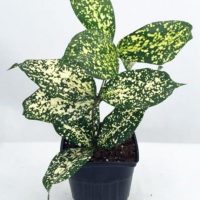
Dracaena surculosa is a gorgeous plant. It has glossy green leaves and white and yellow splotches over the leaf surface.
One can easily see from this photo why it has the common name Dracaena Gold Dust.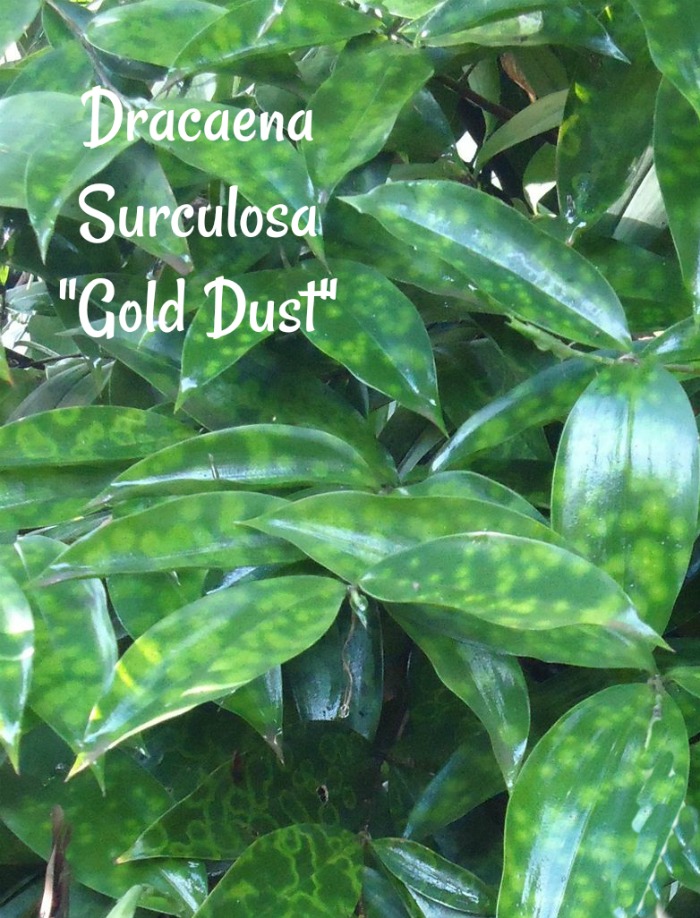
Botanical facts about Dracaena Surculosa
Dracaena surculosa is native to the western tropical Africa rain forest region.
Family: Asparagaceae
Genus: Dracaena
Species: surculosa
Common Names: Dracaena Gold dust, Japanese Bamboo, Gold Dust Plant, Spotted Leaf Dracaena.
Dracaena Gold Dust Makes a Great Indoor Plant
Dracaena plants are commonly used as indoor plants, especially for those that have limited light in their homes. 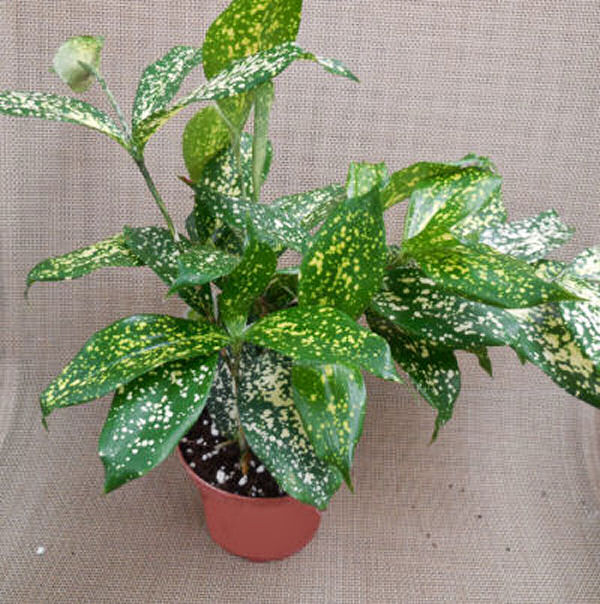 There are about 40 dracaena plant types (mainly shrubs and small trees) in the family and they are known as rugged, low maintenance house plants.
Dracaena Surculosa Plant Care.
This care tips graphic shows how easy this house plant is to grow.
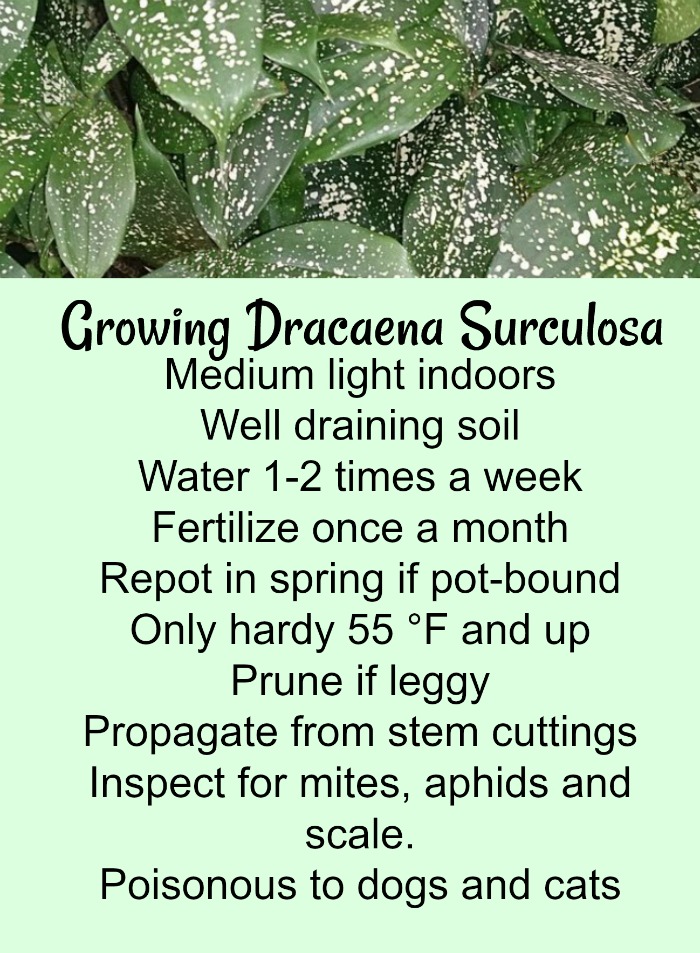 This sturdy houseplant easy to care for. It is a slow-growing evergreen plant that is normally grown for its beautiful variegated foliage. Keep these tips in mind for its care.
Sunlight Needs for dracaena
This house plant likes bright, filtered light, which makes it a great indoor plant. But it can also tolerate lower light conditions. The more light the plant receives, the better the variegation of the foliage there will be.
However, keep out of direct sunlight. Too little or too much light will result in leaf drop.
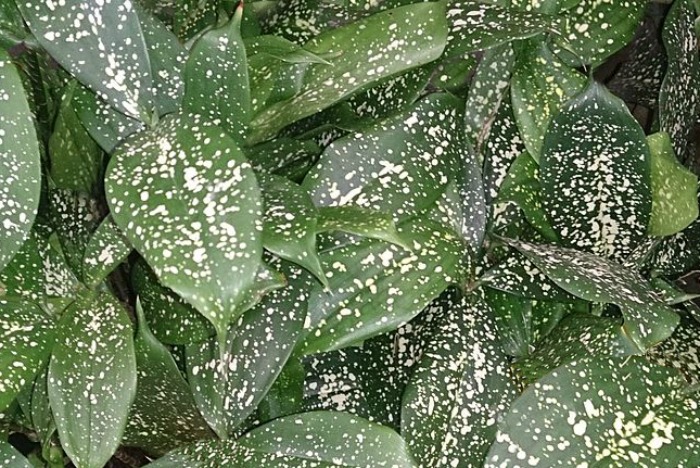
Outdoors, the plant can tolerate a bit more shade and loves to spend the summer outside in a shady sheltered spot.
When to water gold dust house plant
Water dracaena gold dust 1-2 times a week, or when the soil is dry down to about the first knuckle. Don’t over water. A well draining potting soil is essential for the plant.
Dracaena does not like wet feet. Water less in the winter months when the plant is in a dormant period and does not grow much.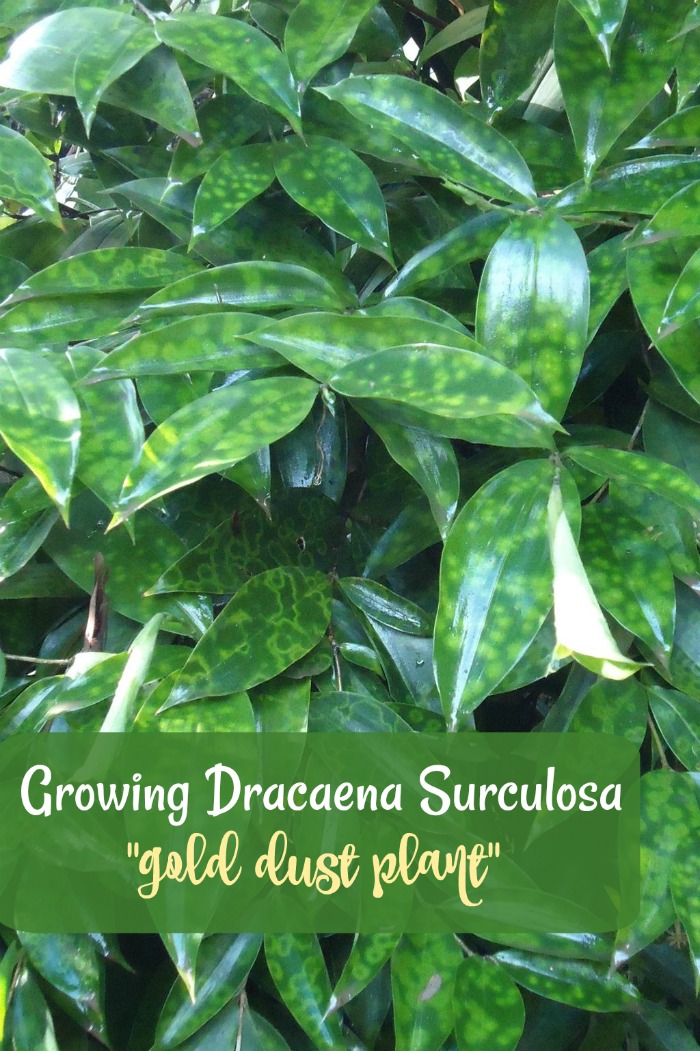
Fertilization needs for Japanese bamboo
Use an all purpose plant food once a month during the growing season. Stop fertilizing during the winter months.
Flowers and Leaves of Spotted Leaf Dracaena
The foliage of this variety of dracaena is glossy green with pointed leaf tips on bamboo like stems.
If your light conditions are good, the leaves of the plant will be covered in yellow spots, giving it the common name “gold dust.”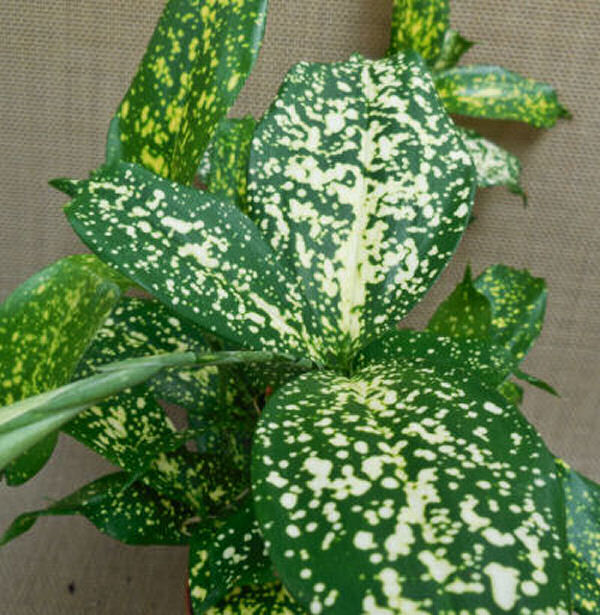
It is very hard to get dracaena surculosa to flower indoors. If you are in the warmer zones, where it will over winter outdoors, you may be rewarded with fragrant white flowers and red berries.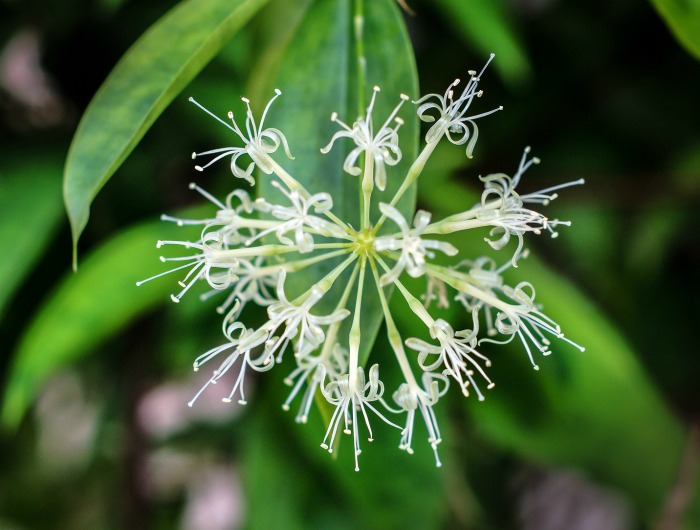
Temperature needs for gold dust dracaena
Dracaena can tolerate temperatures that range from 55-90 degrees F. Ideal house temperatures are 65-70 degrees F. It can take a low temperature down to 50 degrees F.
When to re-pot Japanese bamboo
In the spring, check to see if your plant is pot bound. Gently tip the root ball out of its container and see if it is a mass of roots. If so, it is time to re-pot into a larger pot.
Outdoors, roots will continue to grow into the surrounding soil, but plants grown in pots only have the soil that is in the container. Once it starts to form a circle of roots on the bottom of the soil, it’s getting pot bound.
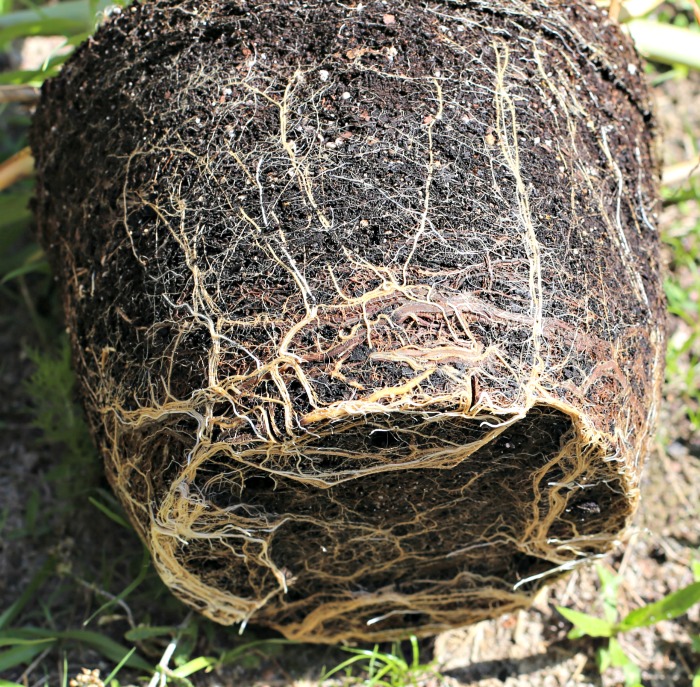
Gently pry the roots out and pot in a new container about 1/3 larger. Add fresh potting soil and water lightly. This will allow for new growth in spring which is the beginning of the growing season.
Is it necessary to prune my Japanese Bamboo?
Generally it is not necessary to prune the plant. If you have it in a lower light situation, the plant may get tall and spindly as it reaches for light.
If this is the case, you can prune off about 1/3 of of the main stem. This will make it sprout new growth at the area of the cut and will make the plant more bushy.
Remove any discolored leaves to keep the plant healthy and pest free. Be on the lookout for spider mites, aphids and scale.
For more general information on pruning plants, see my pruning tips here.
You can use tender stem cuttings from the plant to propagate to get new plants for free. The plant can also be propagated by division of there is more than one crown.
Is dracaena surculosa toxic to pets?
Many household plants can be toxic to pets and humans.
Like most dracaena varieties, surculosa is mildly toxic to pets. The ASPCA lists in their list of plants poisonous to cats and dogs.
The problems with toxicity come from ingestion and reports indicate that it takes moderate to large amount of ingestion for symptoms to occur.
Dracaena surculosa contains saponins. These can cause drooling, vomiting, weakness and a lack of coordination in pets when ingested.
Be on the look out for indications of abdominal pain, increased heart rate and weakness. With cats, look for dilated pupils and drooling. All parts of the plant, including the flowers and berries, are mildly poisonous.
Two other plants that are highly poisonous to pets are brugmansia and dieffenbachia. .
Pin these dracaena gold dust plant care tips for later
Would you like a reminder of these tips for growing spotted leaf dracaena? Just pin this image to one of your gardening boards on Pinterest.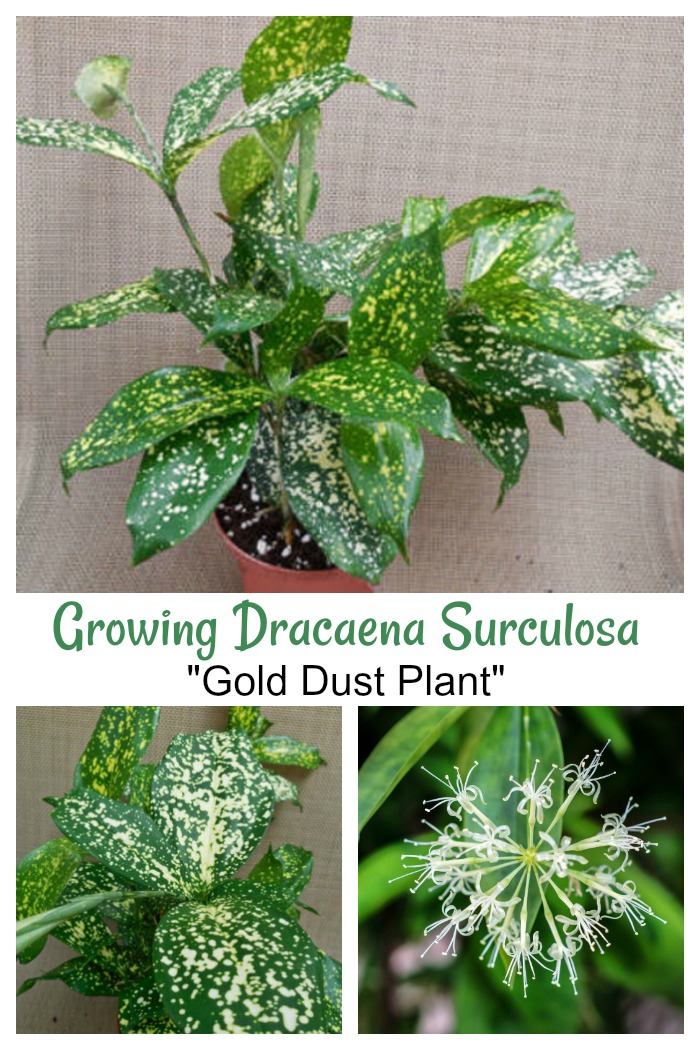
Admin note: This post first appeared on the blog in August of 2013. I have updated the post to add more information and new photos as well as a printable growing tips card and a video for you to enjoy.
Find out more about other dracaena plants:
How to Grow Dracaena Surculosa
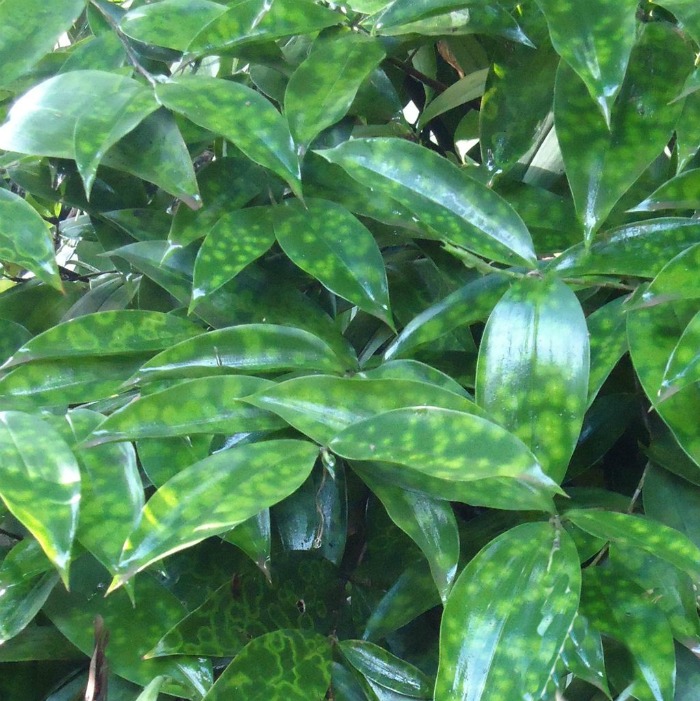
Dracaena surculosa is a slow growing houseplant with glossy green leaves on bamboo-like stems.The leaves are lightly splotched with yellow markings.
Materials
- 1 Dracaena surculosa plant
- Well draining potting soil
- Indoor plant food
Tools
- watering can
- pruners
Instructions
- Plant dracaena in a pot with well draining potting soil
- Place it in a location where it will receive bright light. It can tolerate partial shade but the coloring will not be as pretty on the leaves.
- Water once or twice a week during the growing season. Water less in the winter when it is dormant.
- Fertilize once a month in the growing season with an all purpose indoor plant food.
- Repot in the spring if the plant is pot bound.
- Place outside in the summer months but bring it indoors if the temperatures will be below 55 degrees F. It is only cold hardy in zones 10a and above.
- Take stem cuttings to produce more plants.
- Prune if the plant gets leggy.
- Watch out for spider mites, scale and aphids.
- Print out the care card below and add it to your gardening journal.
Notes
Dracaena surculosa is considered mildly toxic to pets.
Recommended Products
As an Amazon Associate and member of other affiliate programs, I earn from qualifying purchases.
41 responses to “Dracaena Surculosa – Tips for Growing Dracaena Gold Dust Plant”
Would this be a good choice for outdoors in a high shade (mostly facing north) area in San Antonio, Texas?
Hi Mary. I have only grown this plant indoors, but often bring my other houseplants outdoors during the summer months. They do well but only if I put them in a shady spot. Carol
Tiny Flowers are blooming in my plant under the leaves in bunches and climbers are also there on my plant is it normal??
It is rare for this plant to flower. You are lucky!
I live in California and have it out in my backyard, I placed it in a corner so it gets plenty of light but yet it isnt getting the harsh rays of the sun. It survived well through the winters months, and it even did well with all the rain we got. She sufficiently taller and wider than when I first planted her, but from my personal experience this particular plant thrives well outdoors. Hope this helps!
This plant is in the croton family, not draceana
http://www.aspca.org/pet-care/animal-poison-control/toxic-and-non-toxic-plants/gold-dust-dracaena
We live about 10 miles /SW of York, Pa. We live here since 1966. In about 1867-68 my husbands Grandmother gave us her Gold Dust plant she received in a dish garden about 10 yrs. before. We planted it on the East side of the house and there was a big arborita tree about 12 ft, from the house and already 3 stories tall. This year we cut the tree down and still have the Gold Dust plant at the same place. We may have trimmed it once or twice. It is about 5′ tall and about 5’around . It is really nice. Have not done anything else to it. We are going to give some plants that came up to our 3 daughters as a remembrance of our home. So our plant is at least 60 yrs. old and still nice.
I really love having plants from relatives in my garden. I have some astilbe that came from my mother’s garden. Even though she is no longer with us, I think of her when I see my astilbe flowering. Carol
My gold dust, in pot, has new leaves but they are completely green, does it need more light.Adelaide Australia
Hi Dianne. That is normally the case. Spotted plants go green with less light.
Hi, so you plant yours outside.I live in northern Virginia.I hope I can plant it outside.Thanks for all your information
Dracaena likes temperatures of 55-65 degrees F the best. It is not hardy outside where temps routinely fall below 55 degrees F.
Someone forgot to tell mine that have been here since I moved here in 1984. I live in Roanoke, VA. I have trimmed them back at least once and they are now over 6’ y’all.
It must have just the right spot. I have a spider plant (Normally a tropical plant that will not over winter and it comes back for me in one particular spot in my garden. The other places where I plant it won’t over winter. Nature is something else at times!
What you have is called Aucuba japonica, commonly called spotted laurel. Looks almost exactly the same, but it’s a much faster growing shrub. People often mistake them for one another.
What you have is called Aucuba japonica, commonly called spotted laurel. Looks almost exactly the same, but it’s a much faster growing, larger shrub. People often mistake them for one another when searching online. Dracaena sucralosa would never survive your zone and would take forever to get that large, .
I have a gold dust dracaena that, as far as I know, has never been outside. I inherited it somehow, but I don’t remember when or from who. I am fortunate that we have horses and a pile of horse manure years old. I sprinkled some on to the soil — of all my plants! The are all really loving the nourishment but more importantly, I noticed the other evening, when I was watering, that the gold dust has buds beginning to flower! I was pretty excited when I saw them, but even moreso now when I read in the care instructions that they rarely flower indoors. Unfortunately, I don’t have any boy dracaenas so don’t expect berries! But one never knows, does one??
Hi Sarah…OOOH lucky you! What a treat to get it to flower. It obviously loves the manure. Carol
Where can I find these? I did not see it in Lowe’s and Home Depot. 😥
Hi Mary, Each store is different. I have seen them at my local Lowe’s and Home Depot. My experience has been that the winter months in those stores, I see a low supply but when the weather warms up, they seem to bring more plants in. It might be a bit early for your local stores to stock them.
Hi Mary, If you can’t find it locally, this seller on Etsy has it for sale.
I bought a small one in a small pot. The leaves are turning brown I think I needed to water it more!! Should I trim the brown leaves off!#
Hi Abby. Yes trim off the leaves. If they are brown and dry, it’s likely under watering. IF them are brown and soggy looking, it’s over watering.
Hi Carol!
You obviously know your stuff! That being said, I do NOT, hahah! I actually found your page trying to determine what this plant IS because my old cat decided to nibble off the tip of a leaf this morning, which he’s never done. I’m keeping an eye on him, since I know this can be mildly toxic. I have what I BELIEVE to be a gold dust draecena that someone gave me as a gift in my office, oh, 20 years ago. It was little and cute. It’s now over 3″ tall (not including the pot) and is very top heavy. I have it sorta propped up against the wall and a chair. It’s VERY healthy, so I don’t know how to either trim it so it bushes out, or repot. I think because it’s so leggy I’d break the spindly trunks attempting to repot it. Any suggestions? Any ideas how to “fix” this plant??
Thank you so much!
Nancy
Hi Nancy. If the plant has never been repotted, it will probably need it. that being said, once you repot, it will only get bigger. I would do both. I would take it out of the pot and have a look at the roots. If they are a solid mass of roots, just spread them out, put in a new pot 1/3 larger and add new soil.
You can also trim the roots to make them smaller and repot it in the same pot with new soil.
I would also trim off the growing tips to make it sprout new growth below the cuts to make it more bushy and less top heavy.
Hello, I have bought a somewhat overwatered plant and it has been losing leaves so much for 2 weeks now 🙁 , they just turn yellow and fall off. Now I have some completely bare stems. The plant is about 55 cm tall and it has lost more than half the foliage so far. Will it survive, what can I do to help it and should I cut the bare branches to make it grow new ones and renew its lovely look. I am in love with it , so sad! Thank you!
Cut back on the watering to allow the roots to dry out. Your plant likely has root rot. Sometimes a plant will recover if left to dry out and then rewater. Sometimes it is just lost.
Hi! My question is. My plant falls over and does not stand up straight. Is this normal?
It sounds like the top part of the plant might be too large for the planter. Repotting in a larger pot may help.
The leaves on my plant are yellowing and falling off. I bought the plant more than 10 years ago as a young plant. I repotted it when I noticed the leaves dropping. Any suggestions? Also If the plant can’t be saved is there a way for me to take cuttings and create new plants. Thank you.
I don’t diagnose any plants without seeing them in person, since there are many reasons for yellowing leaves. Cuttings can be made of the stem to get new plants.
Hi Carol
I have an old 10+ yr old Draceana surculosa which I’ve recently moved. The soil was moister in the new position due to adding richer composted soil we make ourselves so naturally the leaves are unhappy as roots were subjected to more watered soil than they were getting for past decade. My question is will leaves reshoot along the length of the slender 1 metre tall trunks? I do hope so or do they just dry off and new trunks come from the base or do i cut like my marginatas and hope they reshoot from the cut area. The plant has flowered lovely colours – red/yellow green different to white i see in photos however exact same flower in shape.
Once the bottom of the trunk is bare, it will not send out new shoots until the tip of the stem is cut off.
About watering. The top of my plant looks dry. But when I place my water probe down into the soil, it shows the soil is still wet. So, how far down do you place the probe to determine correctly if the plant needs water. I think this may have been the problem with me under watering my dracaena. My water probe made me think the Plant didn’t need any water yet.
I don’t have experience with water probes so I can’t give advice on them. The vendor where you purchased the probe should be able to help.
@Carol Speake, Thank you Carol for your answer. ok, then how do you determine a plant needs water especially if it is in a large pot as my Dracaena is. The top of the soil seemS dry but When I press my finger into the soil it seems damp. I can never figure out how dry I should let the soil get further down in the pot.
There is no cut and dry answer. It depends on the temperature in your home, the humidity and many other factors. Normally indoor plants need watering at least once a week, and those grown in pots outdoors often need water every day. The soil dries out from the top down so it is normal for the top to be dry and for it to feel wet lower down. How does the plant look? If it is thriving and not soggy, you are probably watering it just fine. If the leaves are dry and shriveled it likely needs water. Probes are just a tool to take the guess work away. If it tells you the plant doesn’t need watering, it is most likely accurate. However, as I said, I don’t have experience with them.
@Carol Speake, Thank you, Carol. Your answer was very helpful.
I would like to know where I can purchase this Gold Dust plant from. I live in Tweed Heeds in Northern NSW Australia
There are many places that sell it online but many are USA based, but if you live in Australia, you should look for Australian suppliers.