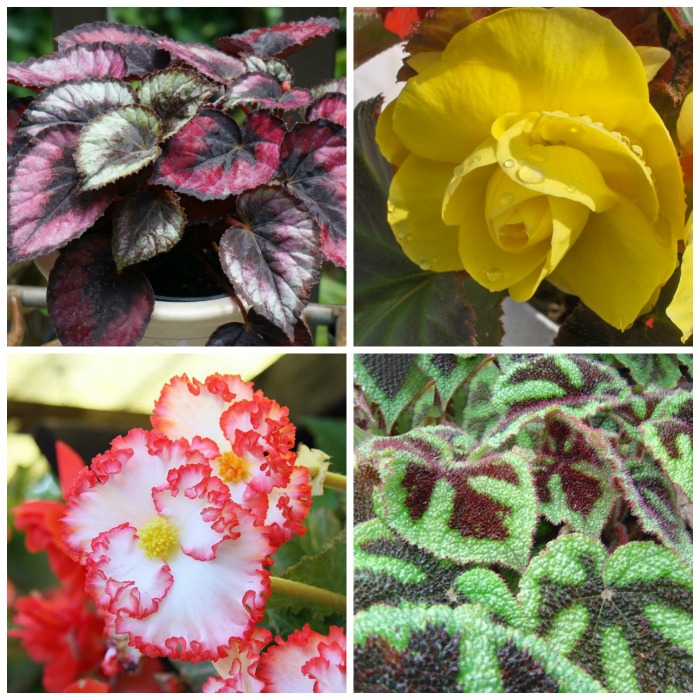
Begonias are a very popular plant worldwide. They are used as bedding plants and can also be grown as indoor plants. There are lots of different leaf types, colors and flower formations. Growing begonias is a little bit of a challenge but you should do fine as long as you follow a few tips.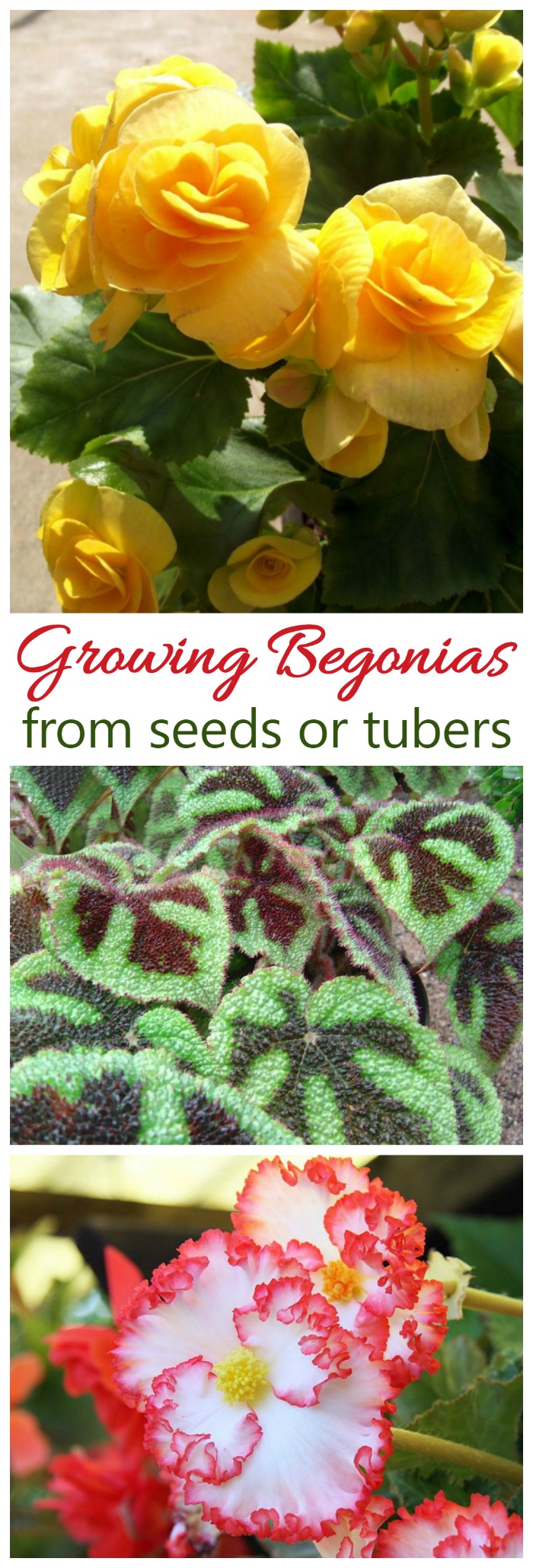
Tips for Growing Begonias.
As an Amazon Associate I earn from qualifying purchases. Some of the links below are affiliate links. I earn a small commission, at no extra cost to you, if you purchase through one of those links.
Tuberous begonias are native to the Andes Mountains of South America. The climate is humid and has cool night temperatures. This gives us an idea as to their care. They are a bit finicky to grow but well worth the effort. Bedding begonias are more commonly found and quite easy to grow.
If you love to grow flowering houseplants, tuberous begonias are one of the showiest of indoor plants, both for their flowers and also their pretty leaves.
Types of plants
There are basically two types of begonias. Some are grown from seeds and the others are grown from tubers. Seed started begonias tend to be small and are a bit harder to grow indoors. They are often used as bedding plants in outside borders.
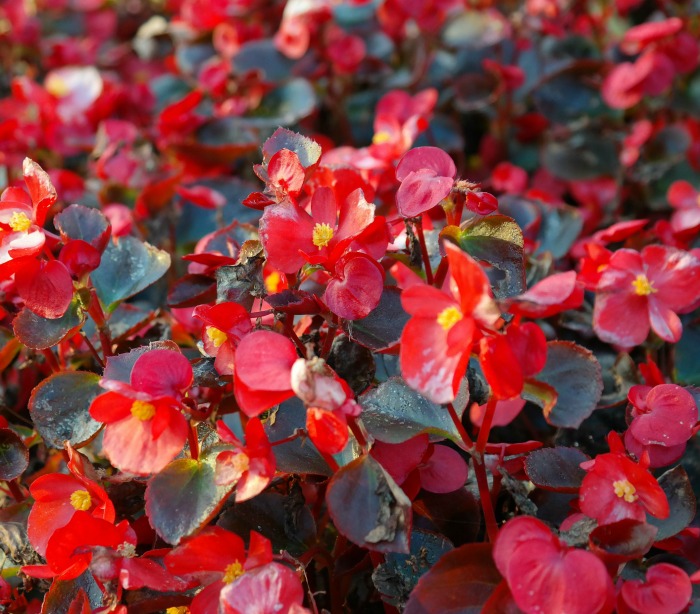
Begonias grown from tubers are more tolerant indoors and grow into larger plants. Both types of begonias come in a wide variety of colors from white through to pink, purple, yellow and red. There are over 1,000 varieties of tuberous begonia’s which can be divided into 2 different categories; upright or hanging.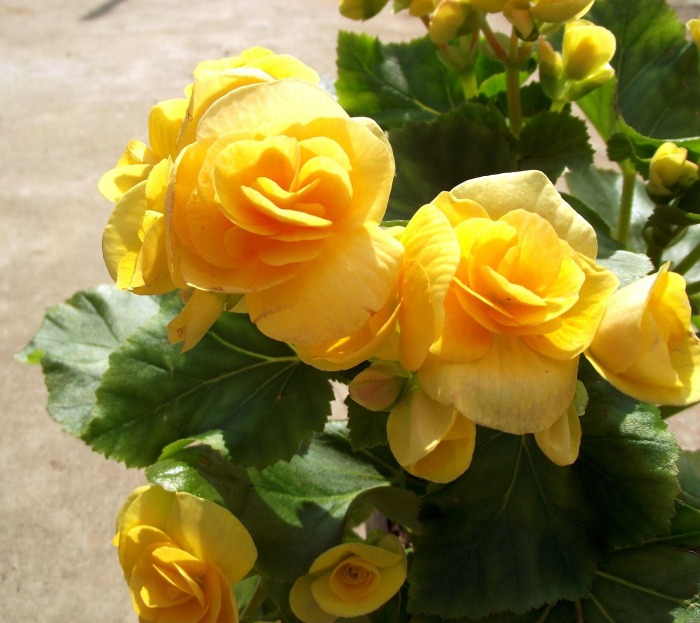
Light requirements
The fact that begonias like shade outdoors makes them ideal for growing inside. If you do plant them outdoors, be sure to avoid direct sunlight. Indoors place them near a window that gets bright filtered light. Early morning sun in an east facing window works well. They also grow well indoors under grow lights. All sorts of containers will work for indoor begonias, even old collanders!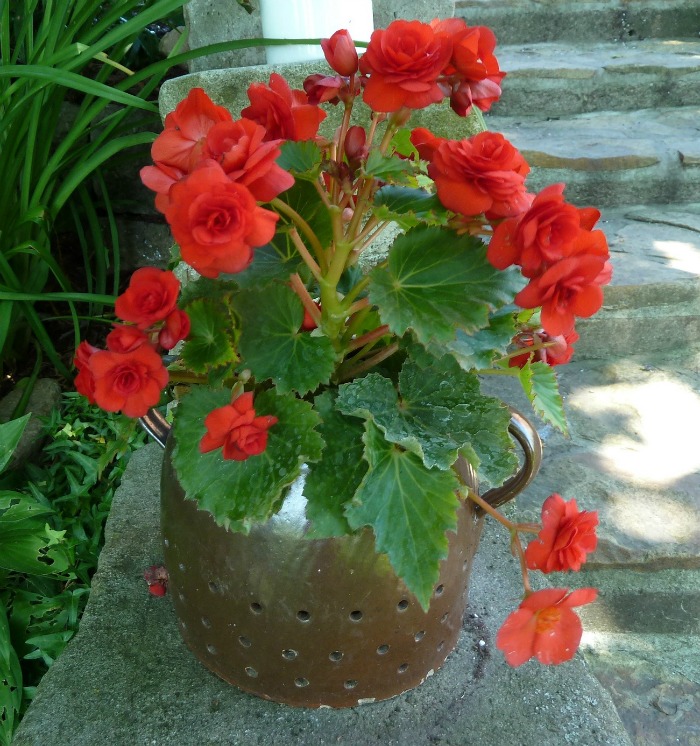
Soil, Moisture and Fertilization
Moisture Needs
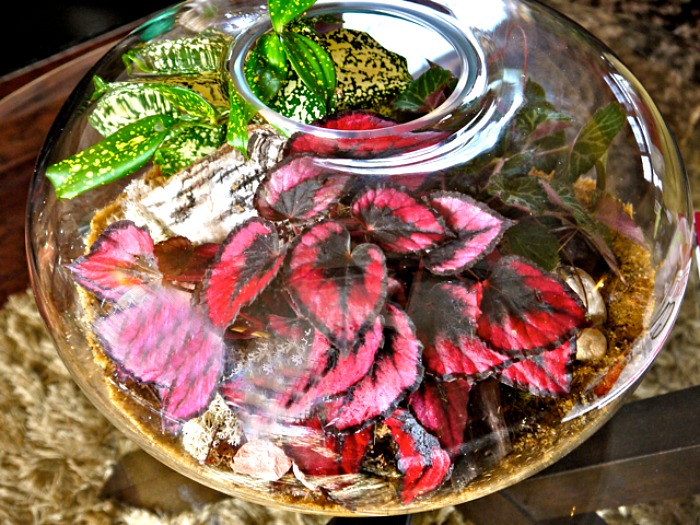
Begonias like to dry out a bit between watering. Like most other plants that don’t like heavy watering, just let the plant dry out to down about the first finger joint when inserted into the soil. If it is dry there, feel free to water. Because of their humidity needs, begonias are ideal for growing indoors in terrariums.
Soil Requirements

A well draining soil mix is a must. Begonias do not like wet feet and will easily drop leaves if they are over watered. (This also makes them susceptible to fungal diseases.) A good mix of soil is 2/3 peat moss and 1/3 potting mixture. (soil free is best) Outdoors, growing begonias means adding lots of organic matter to the soil. Begonias benefit from an acidic soil, which the peat moss gives it. Adding some used coffee grounds to the soil will work wonders for begonias.
Fertilizing
A balanced fertilizer with a 20-20-20 ratio is best. It will nurture both the leaves and the flowers. Liquid fertilizer in your watering can works well for indoor plants.
Leaves and Flowers
Leaf Formation
The leaves of begonias have almost as much interest as the flowers do. The common outdoor type of begonia (also called Ice Begonias) have glossy, small leaves. Tuberous begonias have more interesting leaves.
Begonias have a tendency to become leggy. Pinch the tip of branches to promote a bushier growth. 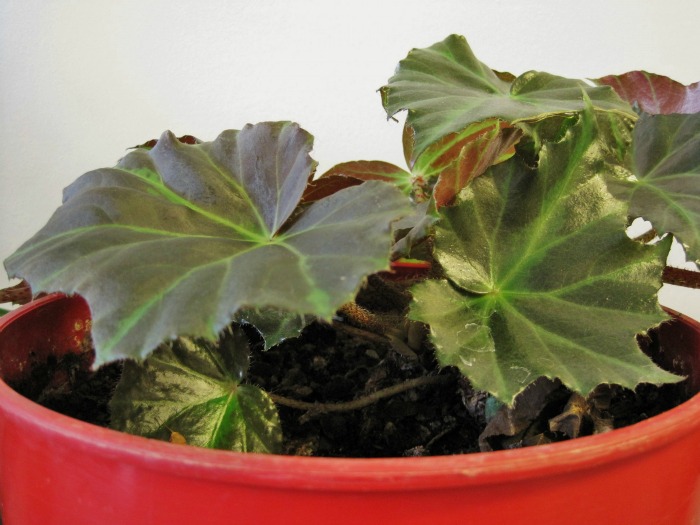
Many tuberous begonias are grown FOR their leaves. Unlike the shiny leaves of bedding ice begonias, most tuberous begonias have slightly fuzzy or patterned leaves. Some, like the Dragon Wing Begonia is very large and light green with speckles on it. Sizes of the leaves can range from ½ inch to 1 foot!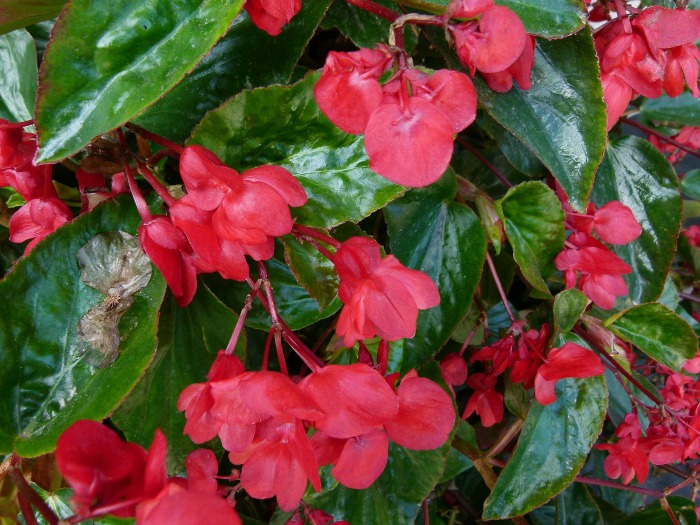
Others, like the Rex Begonia, are grown for the dramatic color that the leaves have. Flowers are sometimes less of factor in these plants, although all do flower.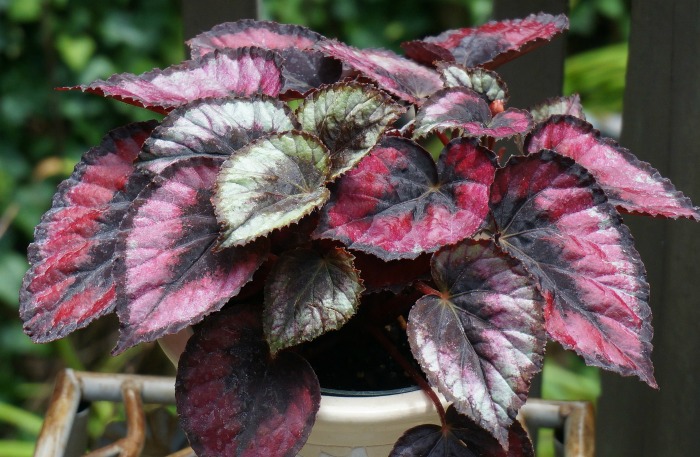
And the Iron Cross begonia has a Majestic leaf pattern with a cross design. Who cares what the flower looks like when you have a leaf like this?

Flower Types
The sky is the limit with the beauty of begonia flowers. There are single flowers, and doubles. Plants are one color or have more than one color in the blooms. Some are solid and others have rimmed edges. Many are straight edges and others are frilly. Whatever the flower type, they all have one thing in common – They are stunningly beautiful.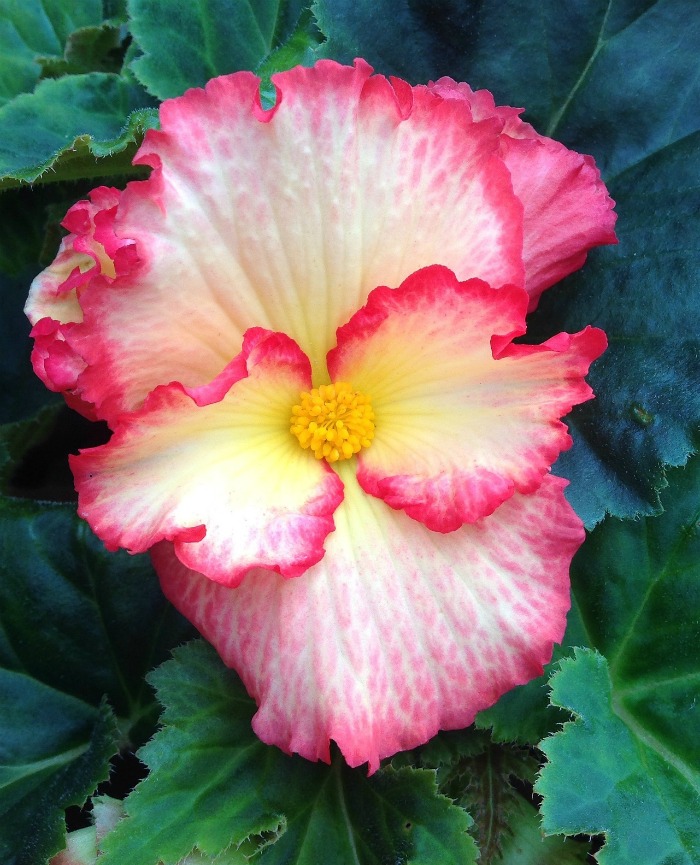
The flowers can sit low atop the plants on some varieties, like bedding plants. On others, the flowers can be up to 8 inch, very showy, and will bloom from summer to fall. One of their greatest attributes outdoors is that they will bloom in the shade.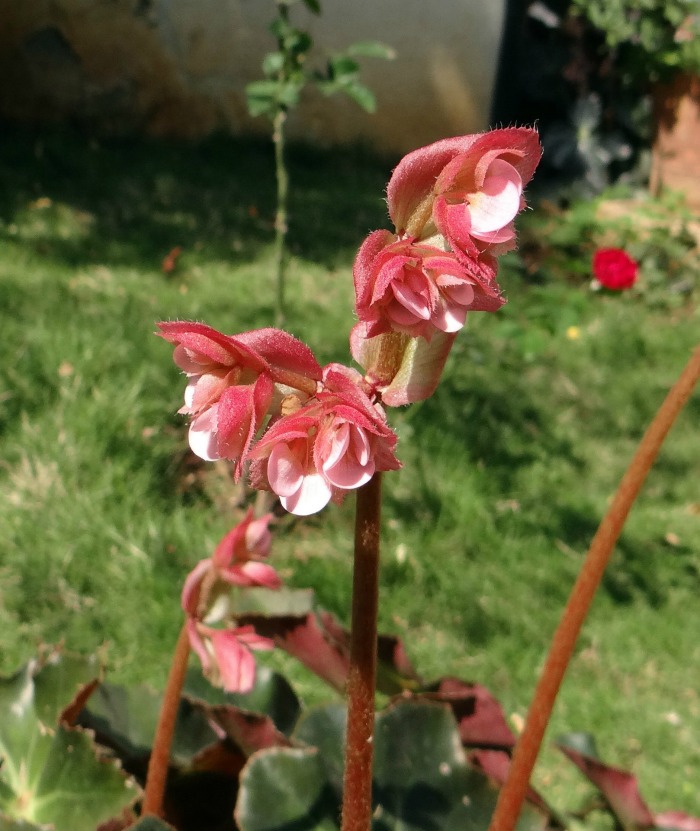
Tuberous begonia flowers are often held up on very tall stalks that sit above the leaves so that both are shown to their best advantage. Most begonias are self cleaning and don’t require deadheading..
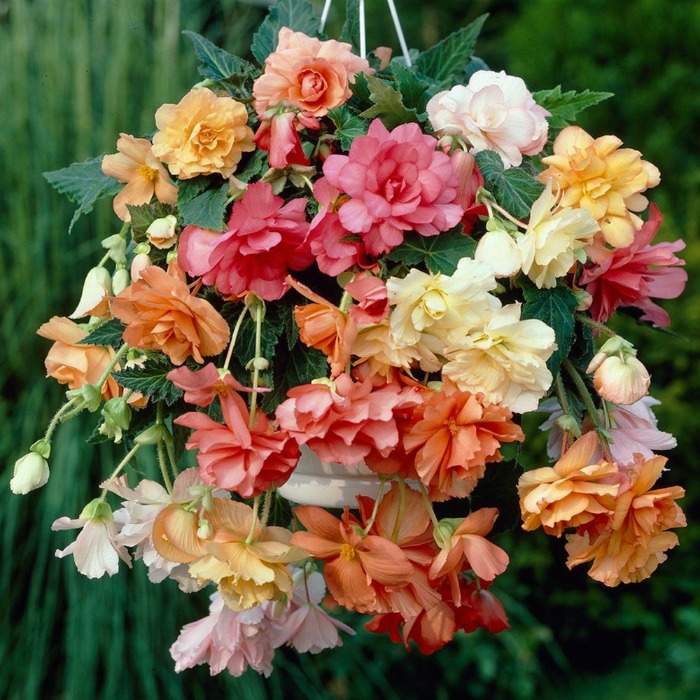
Some tuberous begonia varieties have a cascading habit that makes them ideal for hanging baskets.
Hardiness
All types of begonias are considered annuals outdoors, unless you live in very warm climates. Indoors they will grow as a perennial and come back year after year.
I have begonias growing outside in the summer, and then in the fall I either take cuttings or bring the whole plant indoors to use as a house plant. They do have a dormancy period in the winter months, so go light on watering during this time.
They can even be left with no water in a non freezing spot for the winter if you wish.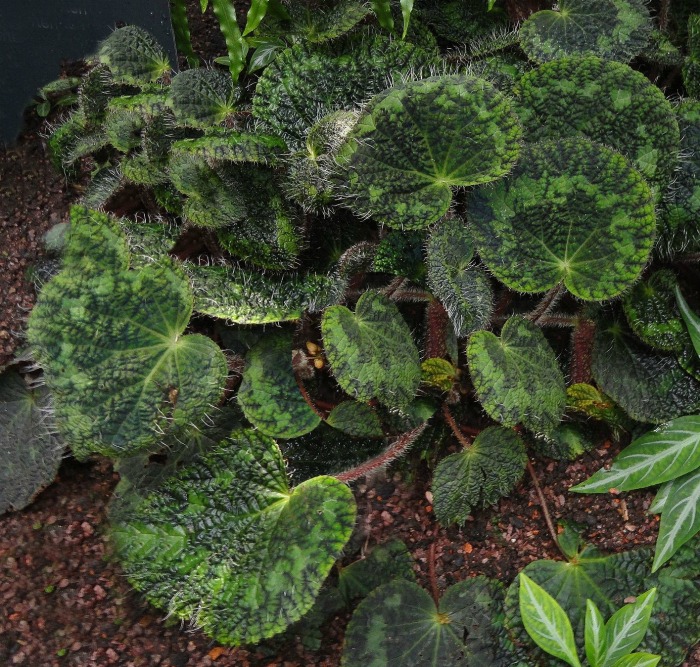
You can also dig up the begonia tubers and bring them indoors for the winter. Let them dry out and store them in a cool place covered in peat moss until you are ready to plant again in the spring.
Begonias like the heat both indoors and out. The ideal temperature for them is 72º F is ideal, but slightly higher or lower temperatures are fine, too.
Propagation
Propagate begonias by taking cuttings in the spring. Plants can also be divided when they are dormant, or when the shoots of plants are still small. To take cuttings, slice along the stem of a begonia and remove any flowers.
This piece of plant below will make several new plants. Just dip the tips of the stems in rooting powder and place in a light seed starting mix. Roots will form in a few weeks and growth in a few more. The white lines in the photo below show where to make cuts and the pink lines show what to discard.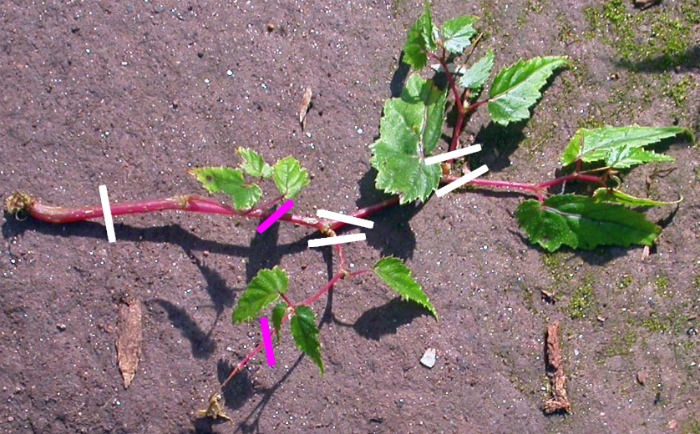
Pests
Pests are not so much of a problem for indoor begonia plants but some care is needed for those grown outdoors. Mealy bugs is the most common pest found indoors. A Q tip dipped in rubbing alcohol will take care of them easily. When growing begonias outdoors, use egg shells as a barrier for slugs and snails by placing them around the base of the plants.
Begonia plants are susceptible to various forms of fungi and bacteria. The right humidity and good airflow is essential to maintaining healthy plants.
Follow these growing tips for begonias and you will end up with a showcase of amazing flowers and leaves both indoors and out.
What luck have you had growing begonias? Did you find them difficult to grow?
25 responses to “Growing Begonias – The Showy Houseplant with Amazing Flowers and Leaves”
I kept my double red tuberous begonia in the house all winter. It lost its flowers but continued to grow foliage. Want to return it outdoors on the porch where it thrived last summer. How can I get it to start flowering again?
Hi Maurice. Begonias will often stop flowering if they are kept indoors. They need a reasonable amount of light. Over fertilizing can also cause the plant to grow foliage instead of flowers. Try giving it a bit more light (gradually increase it, or the leaves will burn.) A time release fertilizer or liquid fertilizer for flowering plants is the best. Carol
I live in Redding, CA which can stay at 110 for a week to 10 days. I have a screened in patio with a drip system of sprayers. The system comes on every other day when the temperature is over 100. The plants are in the shade, and planted in pots with potting soil. Any sun they may get would be early morning. This year I have not added any fertilizer to the pots-only what came with the potting soil. The plants are always large, but the flowers are
disappointing. Is it the verity of begonia, or is there a fertilizer that can help increase the flower size? Thanks for any suggestions.
Hi Steven. Flower size can really vary on begonias. The common begonia annual has 1 inch or smaller flowers. Tuberous begonias might grow to up to 2 inches in size and angel wing begonias have attractive big leaves but 1/2 inch flowers.
Do you have a photo? Carol
Hello Carol,
Thank you for this. I was give a small begiona plant in a small pot. I has small flowers with red petals and yellow center as shown in a picture above. It seems it was outdoor but I am not sure. It also has a few small leaf holes. Should I spray with pesticide? Also, will it still grow indoors with flourescent light? Thank you
Hi Andy. I can’t diagnose any specific plant problems without seeing the plant in person.
My begonia is 7 years old. Once it stops flowering in the fall I put the whole pot in my basement & completely ignore it until after the last frost. Then I put it back on my deck and let nature take care of it. Other than a little water once in awhile & a bigger pot, I have done nothing to it in 7 years. It just gets more spectacular every year.
Hi Aileen. What a lovely looking plant! Thanks for sharing your growing tips for it. Carol
I have a begonia, I think Rex begonias and they have a growth coming out of them, it’s tubular looking and red at base and green at top? I’m just wondering wth it is?? I’ve looked on the web and nothing compares to this. It’s about 3” high too
My tubular begonias’ leaves look lush & healthy however there are no flowers. How can I get them to flower. They are outside
There are several reasons this could be happening. If the plant is in mainly shade, it may not be getting enough light. If the foliage is cut back too soon in the fall, the tubers may not get the nutrition they need for flowering the following year, and if the plant is over watered or over fertilized, the foliage may grow and the blooms not grow.
Do you know the name of the begonia in the reddish pot below your suggestion to pinch back so they don’t become leggy. That looks like one my Grandma had for years that was quite large. I got a start from her. The stems can be anywhere up to probably 10-12″ if it is in a large pot. It blooms light pink. Thanks
That is just a normal tuberous begonia. No particular name that I am aware of.
How often can I water and add fertiliser to my flower
Hi Gisa. It depends on the flower. For most plants I water when the soil is dry down about 1 inch and fertilize once a month during the spring and summer. But some plants are different, so it depends entirely on what you are watering
Good day from South Africa!
We’ve recently relocated to another province and with the moving of our goods and my plants, my begonia “died” as it was not looked after (our goods were in storage because of the lockdown)
I was very sad as this plant came from my mom’s original plant and which was probably about 60+ years old. However, in the small little bit that was left of the stem I saw life! A fine, very small mini-me leave appeared… But that’s it!
We have spring here now, and high humidity, lots of rain during summer months, high temperatures too!
How do I or what can I do to help this little prem begonia to grow again???
Regards
Sonja
Trying to get a plant back from being in storage is very difficult if not impossible. Normal watering and care with sun on the small piece is the only thing to try.
I have a Iron Cross begonia in Southern California. Should I keep it outside? How low can temperatures go? Will it die back then reemerge in the spring? That is, should I expect the Iron Cross to lose all it’s leaves and basically die out, but keep it around because it will come back like bulbs? I want to make sure I am not misunderstanding your article. Thanks
Iron cross begonias are only cold hardy in zones 10 and 11. If the temperature goes below 55 degrees F at any time, it can kill the plant. Most people grow it as a house plant. It is not as hardy as a bulb. Bulbs are intended to withstand low temperatures. Iron cross begonia is not.
This was a very helpful article. . .but of course, I have another question.
I took cuttings from a Vermillion Red Hiemalis Begonia. that was a prolific bloomer in my house near an east facing window for the past 2 years. I repotted the mother plant to a bigger pot about 2 months ago. It is growing very well, but I don’t have any blooms. Do begonias need to be root bound in their pots before they bloom?
The cuttings I took rooted very well, and all of them are now potted and growing well. Can I start giving all of them a fertilizer to bloom now, or should I wait. If so when. They have been potted for about 3 months. I have used a Bat Guano fertilizer in the past. What I dream of doing is to give the new plants, in bloom to friends.
It can take 12 to 14 weeks for a tuberous begonia to bloom after the tubers are planted
Hi, any suggestions which plants grow well alongside begonias indoors? I wanted to pot with a fern but will it kill the begonias?
Other plants won’t kill begonias. It is just important to group them with plants that need similar light conditions. Any plant that does well in filtered light can grow with begonias indoors.
This is an exceptionally well written article. Clearly brief, informative, lots of ideas, and helpful.
How far from windows can plants be placed? I’ve looked online and haven’t found but would love to actually see a diagram or photos! (Filtered light is the common term but….)
Thanks for your info!
There is no hard and fast rule about distance from windows, since many factors apply in windows and awnings and porches, etc. Sunlight also changes depending on how the window faces the sun..
I place my begonia about 6 inches from a south facing window with an overhand outside in winter and in a north facing window during the summer months.